
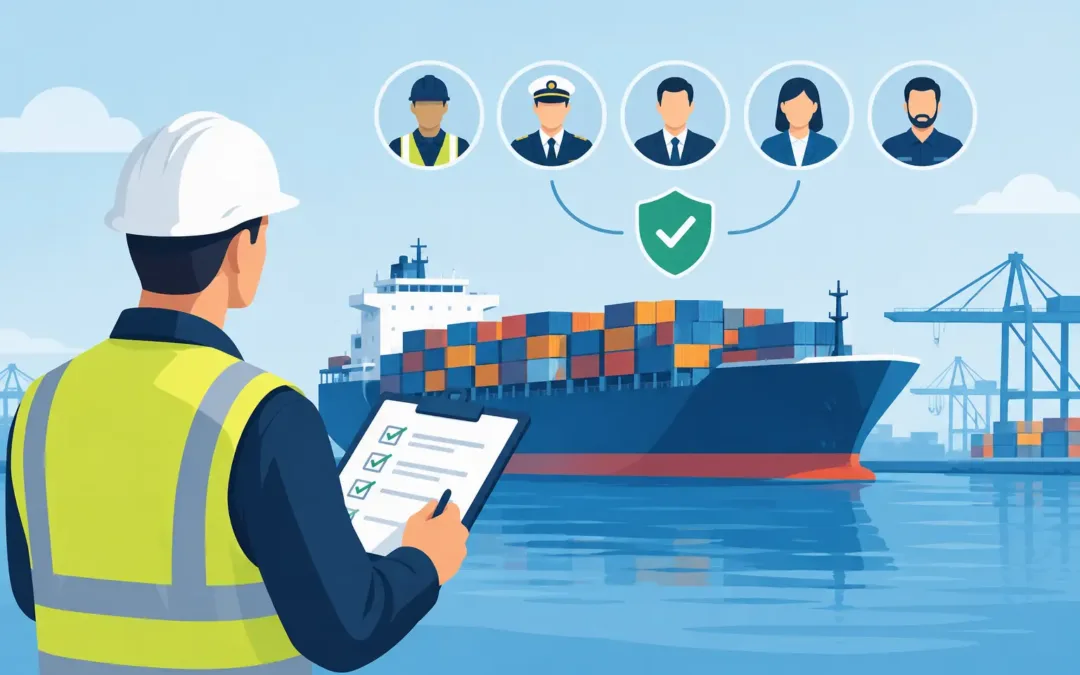
A vessel can be classed, certified, and apparently ready for service while still presenting an unacceptable exposure for a particular cargo, trade, terminal, or insurer. That is why the question is not simply whether a ship needs certificates. The operational question is: who needs vetting before a nomination, fixture, loading window, or insurance commitment proceeds?
In commercial shipping, vetting is required by any party that must make a defensible decision about vessel suitability and risk. It is a structured review of the vessel, its management, crew competency, operating history, safety controls, and fitness for the intended operation. The scope changes with the trade, but the objective remains consistent: identify material risk before it becomes a cargo loss, detention, pollution event, rejection, or claim.
Who Needs Vetting Before Vessel Employment?
Vetting is most closely associated with tanker trading, but the need reaches well beyond tanker owners and oil majors. Any organization exposed to the consequences of a vessel’s performance may require a vetting review.
Charterers and commodity traders
Charterers carry immediate commercial exposure when they nominate a vessel. A poorly selected ship can disrupt laycan commitments, cause terminal rejection, increase demurrage, damage cargo, or trigger claims under a charter party or sale contract. For voyage charterers and traders, vessel vetting provides a practical control before a nomination is issued or accepted.
The review should consider whether the vessel is appropriate for the exact cargo and route, not merely whether it is legally permitted to trade. A chemical cargo may require a close assessment of tank coatings, cargo-history restrictions, segregation capability, pumping arrangements, and cleaning standards. A bulk cargo movement may require review of hatch integrity, hold condition, loading limits, stability information, and cargo securing considerations. For project cargo, the focus may move to deck strength, lifting plans, lashing arrangements, and weather limitations.
A charterer may also need continuing vetting during a long-term arrangement. A vessel that was acceptable at fixture can develop deficiencies, change management, experience a casualty, or accumulate inspection findings that alter the risk profile.
Vessel owners and operators
Owners and operators need vetting to understand how their assets will be evaluated by charterers, terminals, insurers, and cargo interests. Pre-vetting is particularly valuable before marketing a vessel, entering a sensitive trade, attending a terminal with strict acceptance criteria, or undergoing a formal customer assessment.
An independent pre-vetting inspection can identify gaps in maintenance, documentation, crew familiarity, safety management implementation, cargo readiness, and housekeeping before those gaps appear in a third-party report. This is not a substitute for statutory surveys, class inspections, or an effective safety management system. It is a commercial readiness review focused on the conditions that may prevent employment or create operational exposure.
For operators with multiple vessels, vetting findings can also reveal recurring management-system weaknesses. Repeated issues with enclosed-space entry controls, planned maintenance evidence, permit-to-work quality, navigational practices, or corrective-action closure often indicate a fleet-level problem rather than an isolated onboard deficiency.
Cargo owners, receivers, and shippers
Cargo interests need vetting when the cargo value, sensitivity, contractual obligations, or downstream consequences justify independent assurance. This is common for petroleum products, chemicals, edible oils, fertilizers, steel, grains, minerals, refrigerated products, and high-value project cargo.
The cargo owner does not necessarily control vessel nomination, but it still has exposure. Contamination, shortage, wet damage, cargo shifting, temperature excursion, and delayed delivery can become disputes involving carriers, charterers, terminals, insurers, and buyers. A vetting process gives cargo interests a basis to question a proposed vessel or request controls before loading begins.
For cargo-sensitive trades, vetting should connect directly with cargo surveying. A favorable vessel review does not remove the need for pre-loading inspections, hold or tank condition assessments, quantity verification, stowage reviews, lashing checks, or hatch-cover testing. Vetting evaluates the broader operating risk; cargo surveys document the actual condition and handling of a particular shipment.
Marine insurers, P&I clubs, and claims stakeholders
Insurers and P&I interests need vetting because policy exposure can be shaped long before an incident occurs. A vessel’s condition, management quality, casualty history, operational controls, and suitability for a trade can all influence the probability and severity of loss.
For underwriters, an independent assessment can support risk selection, premium decisions, policy conditions, or loss-prevention recommendations. For P&I interests, the review may focus on crew competence, maintenance standards, navigational safety, pollution-prevention measures, cargo operations, and compliance with port or terminal requirements.
Claims handlers and legal teams may also require a vetting-style review after an incident. In that setting, the purpose is different. The review examines whether known deficiencies, inadequate procedures, unsuitable equipment, or management failures contributed to the event. Evidence must be carefully documented and separated from assumption, especially where recovery, defense, or liability allocation may follow.
Terminals, port interests, and facility operators
Terminals have a direct safety and business-continuity interest in the vessels they receive. A vessel that cannot safely berth, connect, transfer cargo, maintain moorings, or meet facility rules can create immediate operational disruption. For liquid bulk terminals, vessel acceptance processes are often highly developed. Dry bulk, breakbulk, and general cargo facilities also need a disciplined approach where cargo characteristics or port constraints create elevated risk.
Terminal-focused vetting may assess compatibility with berth dimensions, draft restrictions, manifold arrangements, mooring equipment, transfer systems, cargo gear, emergency response readiness, and crew communication. It should also verify that vessel particulars and operational documents match the conditions actually encountered at the facility.
When Is Vetting Necessary?
Not every movement requires the same depth of review. The level of vetting should reflect the likely consequence of failure, the cargo hazard, the vessel type, the trade route, and the contractual exposure.
A repeat vessel on a familiar route may require a targeted update if its certificates, inspection history, management, and condition remain satisfactory. A newly nominated vessel, a change in operator, an older asset, an unfamiliar flag or class history, a high-hazard cargo, or a vessel with recent incidents calls for deeper scrutiny. The same applies when a ship is entering a restrictive terminal, a congested port, a hurricane-season trade, or a region with heightened security or regulatory requirements.
Timing matters. Vetting performed after a vessel is fixed, alongside, or already loaded has limited preventive value. The strongest control point is before commercial commitment, with enough time to obtain records, clarify findings, request corrective action, or nominate an alternative vessel.
What a Defensible Vetting Review Should Examine
A meaningful review goes beyond checking that statutory certificates are on board. It should evaluate the relationship between documentary compliance and real operating condition.
Core areas commonly include vessel particulars; flag, class, and statutory status; ownership and management; recent port state control history; casualty and deficiency records; crew competence and manning; safety-management implementation; navigation and bridge procedures; machinery reliability; cargo systems; pollution-prevention arrangements; firefighting and life-saving equipment; and the condition of relevant structural components.
The intended operation determines the technical emphasis. Tanker vetting may require focused review of cargo containment, inert gas systems, manifold condition, pollution controls, tank-entry practices, and transfer procedures. Bulk carrier work may prioritize hatch covers, holds, ballast systems, loading sequences, structural limitations, and water-ingress risks. A pre-purchase review will look more deeply at hull, machinery, electrical, maintenance, and capital-repair exposure.
Findings should be factual, dated, and traceable to observation, vessel records, or reliable inspection sources. A report that uses vague language or unsupported conclusions can create more difficulty than it resolves. Commercial parties need a clear statement of the risk, its operational consequence, and whether corrective action, additional evidence, or a change in nomination is warranted.
Vetting Is Not a One-Time Approval
One frequent mistake is treating a passed review as permanent approval. Vessel risk changes with maintenance performance, crew turnover, management changes, incidents, trading pattern, and the cargo being carried. A vessel accepted for one clean petroleum trade may not be suitable for another cargo or terminal without further review.
The same principle applies to documentation. Certificates establish baseline legal status, but they do not independently prove that a hatch cover is watertight, a cargo system is clean, a lashing plan is adequate, or the crew is prepared for the specific operation ahead. Where those questions matter, targeted inspection and survey work should accompany the vetting decision.
For stakeholders facing a time-sensitive nomination or a developing operational concern, the practical value of vetting is simple: obtain independent evidence early enough to act on it. A disciplined review before exposure is usually less costly than explaining an avoidable failure after the vessel has sailed.
