
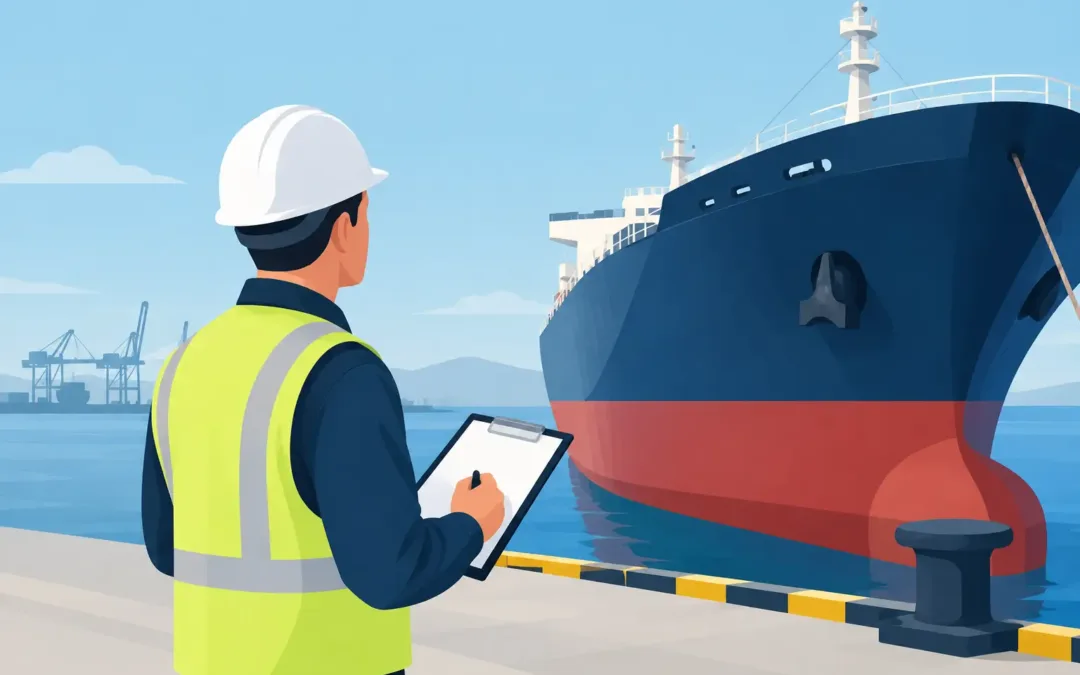
A vessel can be commercially fixed and still be operationally unfit for the voyage intended. Charter party inspections provide an independent record of the vessel, cargo spaces, equipment, documentation, and operating condition at the point where contractual obligations become real. For owners, charterers, cargo interests, and insurers, that record can determine whether a delay, cargo claim, off-hire dispute, or seaworthiness allegation is resolved quickly or becomes a prolonged commercial exposure.
The purpose is not to create paperwork for its own sake. A properly scoped inspection identifies conditions that may affect safe carriage, cargo integrity, loading performance, compliance, and the allocation of responsibility under the charter party. It also establishes evidence before conditions change, repairs are made, cargo is loaded, or the vessel departs the port.
What Charter Party Inspections Examine
The scope of a charter party inspection depends on the vessel type, cargo, charter terms, port conditions, and the concerns of the instructing party. A time-charter delivery inspection may focus on the vessel’s physical condition, class status, certifications, cargo gear, bunkers, and readiness to trade. A voyage-charter inspection may place greater emphasis on cargo spaces, hatch covers, loading suitability, stowage arrangements, and the vessel’s ability to carry the nominated cargo without contamination or damage.
For dry bulk, breakbulk, steel, project cargo, and bagged commodities, survey attention commonly centers on hold cleanliness, previous cargo residues, corrosion scale, water ingress, bilge condition, hatch-cover integrity, and access safety. For cargoes sensitive to moisture, contamination, or odor, a visual hold inspection alone may not be sufficient. Ultrasonic hatch cover testing, water-hose testing where appropriate, and moisture or contamination checks may be necessary to support a defensible finding.
For tanker and liquid cargo operations, the inspection may extend to tank condition, line segregation, pumping arrangements, cargo heating capability, gauging systems, and records relevant to previous cargoes. Refrigerated and specialized vessels require their own technical review, including temperature-control capability, alarms, power redundancy, and cargo-space suitability.
A useful inspection does not treat every vessel as the same. The survey plan should be built around the contractual exposure and the actual risk presented by the cargo and voyage.
Why Timing Changes the Value of the Survey
Inspection timing is often decisive. A condition survey conducted before delivery or redelivery can establish whether the vessel meets the condition required by the charter and whether any deficiencies existed before responsibility transferred. If the inspection occurs only after a dispute arises, key evidence may already be unavailable.
Pre-loading inspection is equally important. Once cargo is in the holds or tanks, access is limited and a condition issue may be difficult to isolate. A pre-loading record can document the cleanliness and dryness of cargo spaces, hatch-cover condition, bilges, structural observations, and readiness of cargo-handling equipment. It can also identify defects that require correction before loading begins.
During loading, independent attendance may be warranted where there is a heightened risk of wet cargo, contamination, shortage, poor trimming, improper stowage, or damage from stevedore operations. The surveyor can record exceptions as they occur, verify the sequence of loading, observe lashing or securing measures, and preserve photographs, measurements, statements, and contemporaneous notes.
At discharge, out-turn inspection supports the same discipline. Cargo condition, quantity, shortage, damage, seal status, and handling events should be documented before the cargo moves beyond the terminal’s control. The objective is to distinguish voyage-related damage from issues arising before loading or after discharge.
Contract Terms Must Drive the Scope
Charter party language should be reviewed before attendance. Clauses relating to delivery, redelivery, cargo-worthiness, seaworthiness, maintenance, bunkers, speed and consumption, off-hire, laytime, notices, and claims procedures will influence what evidence matters most.
For example, a charterer concerned about off-hire exposure may need a condition assessment of machinery, deck equipment, cranes, hatch covers, and deficiencies that could interrupt commercial service. An owner preparing for delivery may need evidence that apparent defects are cosmetic, pre-existing, outside the owner’s responsibility, or do not impair the vessel’s performance or safety.
Cargo clauses require similar precision. If the charter requires clean, dry, odor-free holds, the inspection report should state what was observed and what tests were performed. A broad statement that holds were “satisfactory” offers little protection if a contamination claim later develops. Findings should identify the location, condition, extent, likely operational impact, and any corrective action requested or completed.
The surveyor is not there to rewrite the charter party or provide legal interpretation. The surveyor’s role is to produce accurate technical evidence that allows commercial and legal teams to apply the contract to the facts.
Key Risk Areas That Need Independent Evidence
Certain conditions repeatedly generate charter party disputes because they affect both operational performance and contractual responsibility. These areas merit focused inspection rather than assumptions based on certificates or verbal assurances.
- Cargo-space condition, including cleanliness, dryness, residues, scale, odor, bilges, and suitability for the nominated cargo.
- Hatch-cover and weathertight integrity, particularly where water ingress could damage cargo or delay loading.
- Deck machinery, cranes, grabs, conveyor systems, and cargo gear that may affect loading rates, safety, or off-hire exposure.
- Hull, structural, machinery, electrical, and safety observations that could affect seaworthiness or compliance.
- Bunker quantity and quality at delivery, redelivery, or where consumption and fuel-condition disputes are anticipated.
- Cargo quantity, including draft surveys, tally verification, shore figures, and discrepancies between loading and discharge records.
Not every inspection requires every element. A limited attendance may be sufficient where the dispute risk is narrow and the vessel’s condition is well documented. Conversely, a high-value cargo, distressed vessel, difficult port call, or history of claims may justify a broader condition and operational survey.
Documentation Is the Commercial Safeguard
The value of a charter party inspection rests on the quality of its evidence. Reports should be factual, time-stamped, and specific enough for a third party to understand what was seen without having attended the vessel.
Clear photographs must be supported by captions, locations, and context. Measurements should identify the method and instrument used. Statements from vessel personnel, terminal representatives, or stevedores should be attributed and separated from the surveyor’s own findings. If access was restricted, weather prevented testing, or equipment was unavailable, the report must state that limitation directly.
A disciplined report also records the chain of events. When was the surveyor appointed? When did the vessel tender notice of readiness? Was a defect reported before or after loading? Was corrective work completed and verified? These details can become central in disputes involving demurrage, detention, off-hire, cargo damage, or alleged breach of charter obligations.
Where a condition requires immediate attention, the surveyor should notify the instructing party promptly rather than wait for the final report. Early notification gives operators an opportunity to mitigate loss, arrange repairs, protect cargo, or reserve their position under the contract.
Coordinating the Inspection Without Delaying Operations
An effective survey should support port operations, not obstruct them. That requires advance coordination with the master, port agent, terminal, chartering team, and, where relevant, P&I or underwriters. Access requirements, safety induction, permit procedures, inspection windows, and communication channels should be established before arrival where possible.
The surveyor must also work within the vessel’s safety management system and terminal rules. Hold entry, work aloft, enclosed-space access, hatch-cover testing, and machinery inspections require appropriate controls. A rushed inspection that compromises safety or bypasses access procedures creates a different form of exposure.
For urgent appointments, speed matters, but so does clarity of instruction. The appointing party should identify the commercial issue, relevant charter clauses, cargo details, port timeline, known defects, and the required deliverable. That allows the surveyor to deploy with the right testing capability and direct attention to the facts most likely to matter later.
Use Inspection Findings Before They Become Claims
The strongest commercial use of an inspection is preventive. If cargo spaces are not ready, require cleaning and reinspection before loading. If hatch-cover integrity is questionable, test and repair before a weather-exposed voyage. If cargo gear is defective, document the condition and clarify responsibility before delay accumulates. If bunker figures do not reconcile, investigate before delivery or redelivery is accepted.
There are times when the proper course is to proceed under protest, issue a notice, reserve rights, or obtain additional technical evidence. Those decisions depend on the charter party, the operational urgency, and the severity of the condition. Independent findings give decision-makers a reliable basis for acting without overstating the facts.
Zeus Marine and Cargo Solutions LLC provides independent vessel, cargo, bunker, hatch-cover, and operational inspection support for routine appointments and short-notice matters. The objective is straightforward: establish the condition, identify the risk, and provide evidence that can withstand commercial and claims scrutiny.
When the vessel is alongside and the operation is moving, small omissions can become expensive arguments. Arrange the right inspection early enough for its findings to protect the voyage, the cargo, and your contractual position.
