
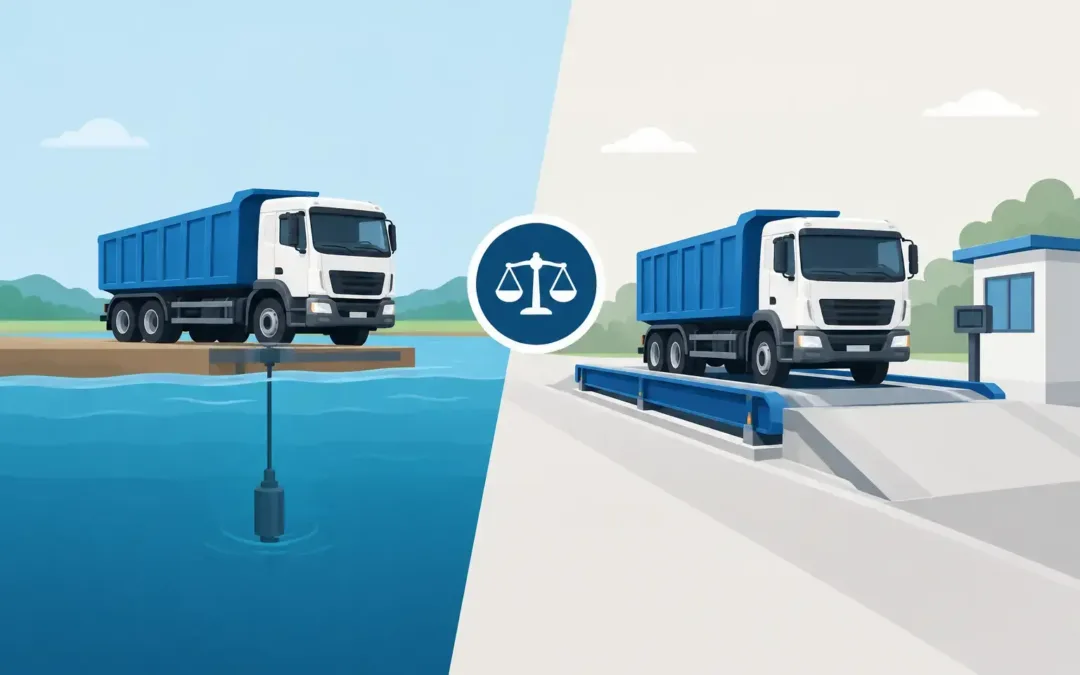
A quantity difference does not need to be large to become a commercial problem. On a bulk cargo movement, a variance of a few hundred metric tons can affect invoice value, freight calculations, terminal exposure, charter-party performance, and an insurer’s view of the evidence. The choice between draft versus weighbridge measurement should therefore be made before loading starts, not after figures fail to reconcile.
Both methods can produce reliable results. They do not, however, measure the same thing, operate under the same controls, or carry the same evidentiary weight in every trade. The right method depends on the cargo, loading sequence, available infrastructure, contractual terms, and the level of dispute risk.
Draft Versus Weighbridge: Different Evidence Bases
A draft survey determines cargo quantity by calculating the vessel’s change in displacement. Surveyors read the vessel’s drafts before and after cargo operations, apply hydrostatic data, and adjust for factors such as water density, ballast, fuel, fresh water, stores, and other onboard weights. The resulting net displacement change is treated as the cargo loaded or discharged.
A weighbridge measures the gross and tare weight of trucks, railcars, or other cargo conveyances passing over a calibrated scale. The net weight of each delivery is recorded and accumulated into a loading or discharge total. In a controlled terminal environment, weighbridge data can provide a detailed transaction record by vehicle, time, ticket number, and cargo lot.
The distinction is fundamental. Draft surveying measures the vessel as the receiving or discharging unit. Weighbridge systems measure cargo movements through a specific point in the logistics chain. A vessel may receive cargo from a weighbridge-controlled facility, but the final draft survey can still differ because the two methods capture different conditions and potential losses.
When a Draft Survey Is the Better Control
Draft surveying is often the practical primary method for bulk cargoes loaded directly to a vessel where no certified scale system covers the full cargo flow. It is widely used for coal, grain, aggregates, fertilizers, scrap, minerals, and similar commodities moving through ports where truck, stockpile, conveyor, barge, or terminal figures may not provide a single verified shipment total.
Its strongest advantage is that it establishes the quantity physically placed aboard the vessel, subject to proper survey practice. This matters when the commercial question is not simply how much cargo left a supplier’s gate, but how much cargo was loaded into the ship’s holds.
A properly executed draft survey requires disciplined fieldwork. Draft readings must account for trim, list, swell, current, berth access, lighting, draft-mark condition, and the vessel’s actual hydrostatic particulars. Water samples should be obtained at representative locations so density corrections reflect conditions at the time of each reading. Ballast and consumable quantities must be verified rather than estimated, and changes between initial and final surveys must be documented.
The vessel itself also matters. Incorrect lightship data, unrecorded constants, inaccessible draft marks, damaged marks, or incomplete tank soundings can degrade the result. For this reason, an independent surveyor should record observations, calculations, source documents, photographs where useful, and any limitations affecting the reported figure.
Draft surveys are not instant. They require access to the vessel, cooperation from shipboard personnel, safe conditions for readings, and sufficient time before and after cargo operations. Where port calls are compressed, survey attendance must be coordinated early so the survey is not reduced to a rushed calculation after the vessel is already preparing to sail.
When a Weighbridge Provides Stronger Detail
A weighbridge is usually the preferred operational control when cargo enters or exits through a managed terminal gate and the equipment is certified, maintained, and protected from manipulation. It can provide a granular record that a draft survey cannot: each truck’s gross weight, tare weight, cargo net weight, time of entry, time of exit, and often vehicle or driver identification.
This detail is valuable for cargo owners and terminals managing inventory, truck turn times, supplier deliveries, stockpile reconciliation, and segregation by grade or origin. For packaged cargo, project cargo, steel products, and commodities where individual units or deliveries must be tracked, weighbridge evidence may be more commercially useful than a vessel-level displacement calculation.
Yet a weighbridge total is only as reliable as its control environment. Scale calibration must be current and traceable. Tare weights should be managed carefully, especially where trucks may retain residual cargo, water, mud, dunnage, or unauthorized items. Ticket sequences need to be complete, voided tickets must be explained, and duplicate or manual entries require review. If cargo is transferred from trucks to an open stockpile before loading, the scale total does not automatically prove the exact quantity that reached the vessel.
Weather and cargo characteristics also matter. Moisture-sensitive commodities can gain or lose water during storage, handling, or exposure to rain. Dust, spillage, conveyor losses, stockpile contamination, and cargo left in loaders or hoppers may explain a gap between scale tickets and final shipboard quantity. These are operational facts, not necessarily evidence that one party’s figure is wrong.
Accuracy Is Not a Single Number
Parties often ask which method is “more accurate.” The more useful question is: accurate for what purpose, under what controls, and within what contractual tolerance?
A well-maintained weighbridge can offer highly precise individual weight records. A well-conducted draft survey can provide a credible independent quantity determination for the vessel’s actual cargo intake. Neither should be treated as automatically superior without examining the operation.
For example, a terminal may have certified scales but poor control over cargo losses between the scale and vessel. In that case, weighbridge figures may be excellent for supplier settlement while draft figures better reflect loaded quantity. Conversely, a vessel with uncertain constants, significant trim, rough water conditions, or incomplete onboard records may produce a draft result with wider uncertainty than a tightly controlled scale system.
The expected tolerance should be agreed before the operation. It should reflect cargo type, vessel size, loading method, terminal controls, and the intended commercial use of the figure. A tolerance that is realistic for a large bulk carrier in open-water draft-reading conditions may be unacceptable for a short-haul trucked cargo movement through a modern automated terminal.
Managing Differences Before They Become Claims
Differences between draft and weighbridge totals should trigger a reconciliation process, not an immediate allegation. The first step is to confirm that both figures refer to the same cargo, same time period, same units, and same loading scope. It is not uncommon for one figure to include retained cargo, rejected loads, moisture changes, or deliveries that occurred outside the vessel’s loading window.
The investigation should then examine scale certificates, weigh tickets, truck tares, terminal records, conveyor or stockpile losses, vessel draft observations, hydrostatic tables, density samples, ballast movements, bunker consumption, and changes to other onboard weights. The survey report should distinguish verified facts from assumptions and clearly identify any records that were unavailable.
Contract language should also state the governing quantity method. If payment, freight, or title transfer depends on a particular figure, the clause should define the survey method, appointing party, attendance rights, allowable tolerance, procedures for joint survey, and the handling of discrepancies. Leaving these issues to port-side interpretation is an avoidable source of dispute.
Independent attendance is especially valuable where cargo value is high, the counterparties are unfamiliar, or a claim is already anticipated. An independent surveyor can observe the operation, verify source documents, identify departures from procedure, and issue a report that is more defensible to insurers, P&I interests, claims handlers, and legal teams than an unsupported operational summary.
Selecting the Right Quantity Strategy
For many bulk shipments, the strongest approach is not draft survey or weighbridge in isolation. It is a controlled comparison of both. Weighbridge records provide traceability through the terminal or delivery chain, while a draft survey provides an independent vessel-based check at completion. The difference between the two becomes useful intelligence about handling loss, inventory control, moisture exposure, or documentation weakness.
Where a draft survey is selected as the contractual basis, arrange pre-loading and post-loading attendance, verify vessel data early, and preserve ballast and consumables records. Where weighbridge figures govern, confirm calibration status, ticket integrity, tare controls, and cargo accountability from scale to ship. For sensitive, high-value, or disputed shipments, establish joint procedures before the first ton moves.
Zeus Marine and Cargo Solutions supports quantity verification with independent draft surveys, cargo inspections, tally work, and evidence-focused reporting for routine port calls and time-sensitive assignments. The objective is not merely to issue a number. It is to establish a quantity record that can withstand operational review and commercial scrutiny.
Before the vessel berths, identify the quantity that actually matters to the transaction, define how it will be measured, and ensure the records needed to defend it will still be available after sailing.
