
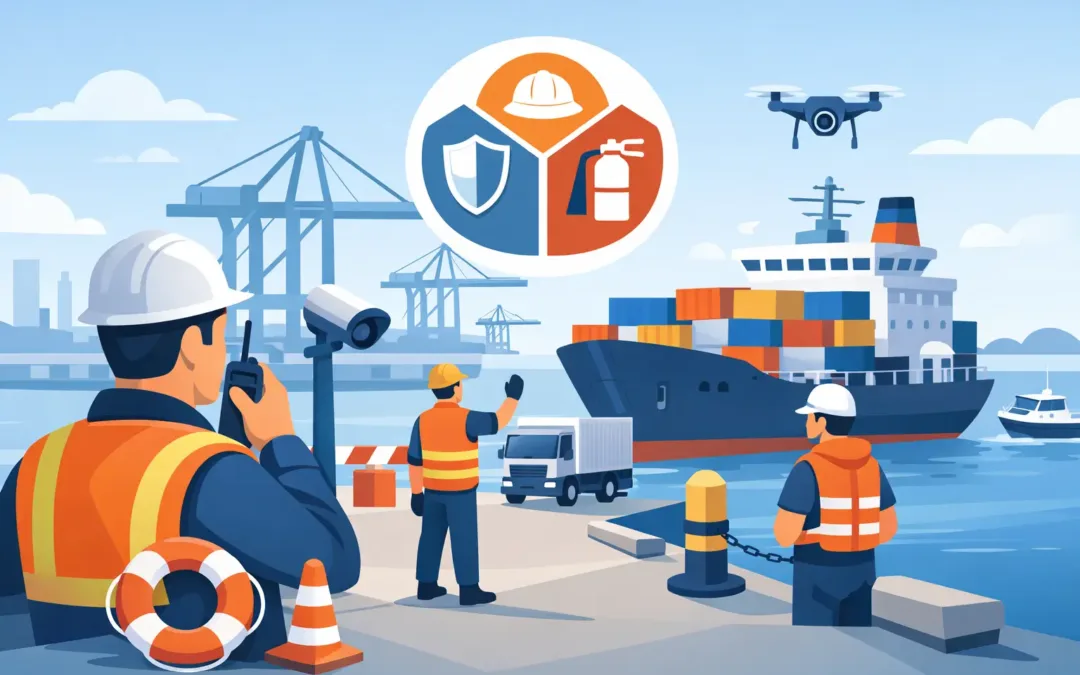
A vessel can arrive alongside with a clean cargo plan, sound gear, and an experienced crew, yet still face material exposure before the first unit moves ashore. Port safety is determined at the handoffs: vessel to terminal, terminal to truck or rail, superintendent to stevedore, and operation to documentation. A missed exclusion zone, an unverified hatch condition, or a change in weather can quickly become an injury, cargo claim, delay, or pollution event.
For owners, charterers, cargo interests, and insurers, port safety is not limited to personal protective equipment or a pre-job meeting. It is the disciplined control of people, equipment, cargo, access, communications, and records throughout a port call. The objective is straightforward: identify conditions that can cause loss, assign responsibility before work begins, and preserve evidence when an incident or dispute occurs.
Port Safety Starts Before the Vessel Is Worked
The most effective controls are set before cargo operations begin. A vessel and terminal may each have established procedures, but their interfaces must be tested against the actual call. Cargo type, stowage plan, berth arrangement, shore equipment, gang labor, tides, weather, and simultaneous operations can alter the risk profile materially.
A pre-operation review should confirm that the cargo plan is workable, the vessel’s stability requirements are understood, and the sequence of loading or discharge does not create unsafe list, trim, or structural stresses. For bulk and breakbulk cargoes, this includes communication on trimming, hold access, dust control, and loading rates. For project cargo and heavy lifts, the lift plan, certified capacities, rigging arrangement, crane outreach, ground or quay loading limits, and landing areas require close scrutiny.
The review should also establish who has authority to stop work. This point is often assumed rather than documented. The master retains responsibility for vessel safety, while the terminal controls its workforce and equipment. A clear stop-work protocol avoids hesitation when conditions change.
Check the Vessel-Terminal Interface
The ship/shore safety checklist remains a practical control, especially where liquid bulk cargoes, dangerous goods, bunkering, or enclosed work are involved. It should be completed as an operational verification, not treated as a formality. Statements concerning moorings, gangway access, fire readiness, communications, emergency shutdowns, lighting, and spill response must reflect conditions at the berth.
Independent observation can be valuable where the stakes are high or parties have competing commercial interests. A surveyor can record the physical condition of access arrangements, cargo spaces, hatch covers, lashing systems, and operational controls before the work changes those conditions. That baseline is frequently decisive if damage is reported later.
Control Access, Movement, and Work Areas
Ports combine large mobile equipment, suspended loads, vessel motion, uneven surfaces, and changing work fronts. The most serious events commonly occur when pedestrian activity and cargo-handling equipment are not effectively separated.
Safe access begins at the gangway. The arrangement should be properly secured, fitted with safety netting where required, adequately illuminated, and protected from passing equipment. The landing area needs to remain clear throughout the operation, not merely at the start of the shift. Changes in tidal range, vessel freeboard, or mooring tension may require repositioning or adjustment.
On deck and ashore, exclusion zones must be visible and enforced around crane lifts, forklift routes, hatch openings, winches, and cargo staging areas. Radio channels, hand signals, and designated signalpersons should be agreed before work starts. A common language challenge does not eliminate the need for clear instructions; it increases the need for simple commands, confirmation protocols, and competent supervision.
Cargo staging deserves equal attention. Units placed too close to the quay edge, stacked outside approved limits, or left without adequate securing can endanger personnel and compromise cargo integrity. The terminal’s traffic plan should account for emergency access, fire lanes, reefer connections, hazardous cargo segregation, and the route from vessel to storage area.
Cargo Integrity Is a Port Safety Issue
Cargo damage and personnel safety are often managed separately, but the two are closely connected. Poor stowage can shift a vessel’s center of gravity. Damaged packaging can release hazardous contents. Inadequate lashing can create falling-object risks during sea passage or while units are being handled at the terminal.
Before loading, cargo interests should verify the condition of packaging, marks, seals, dunnage, and apparent moisture exposure. For steel, forest products, bagged cargo, machinery, and project units, pre-loading condition evidence can establish whether damage existed before custody changed. For containerized cargo, inspection should include external condition, door operation, structural damage, placards, and seal integrity where relevant.
During loading, stowage and lashing reviews should confirm that the actual arrangement matches the approved plan and applicable cargo securing requirements. The issue is not simply whether lashings are present. Their placement, tension, compatibility, condition, and accessibility matter. Cargo that cannot be safely accessed for inspection, release, or emergency response introduces risk beyond the voyage itself.
For bulk cargoes, contamination, wet damage, incorrect quantity, and unsafe hold conditions can develop together. Draft surveys, tally verification, and cargo condition inspections provide controls that protect commercial interests while identifying conditions that may affect the vessel’s safe operation.
Weather, Water, and Moorings Require Active Management
A berth is not a controlled environment in the same way as a warehouse. Wind, current, swell, rain, lightning, and tidal movement can change an otherwise acceptable operation within minutes. Weather limits should be defined for the cargo and handling method, then monitored during the shift.
Rain may require suspension of moisture-sensitive cargo operations. High winds can affect crane work, suspended loads, hatch covers, and gangway safety. Swell and passing-vessel wash can overload moorings or create dangerous movement between ship and shore. These are not always reasons to halt work permanently, but they require reassessment by the parties responsible for the operation.
Mooring lines should be inspected regularly for condition, lead, chafing, and tension. A vessel that moves unexpectedly along the berth can damage the gangway, shore connections, cargo gear, or adjacent property. Where a terminal uses automated or high-intensity loading systems, communication between the vessel and shore team becomes even more critical.
Dangerous Goods Need More Than Correct Paperwork
Accurate dangerous goods documentation is necessary, but it does not by itself control the exposure. Port personnel need to know what is aboard, where it is located, how it is segregated, and what response measures apply if a leak, fire, temperature excursion, or damaged package is discovered.
The cargo declaration, safety data, placarding, and stowage position should align. Any discrepancy should be escalated before handling continues. For packaged dangerous goods, visible package damage, leakage, odor, or incompatible storage conditions should trigger isolation and inspection. For bulk liquid and gas operations, hose condition, manifold arrangements, bonding, emergency shutdown capability, and spill readiness must be verified at the working interface.
A practical emergency response plan identifies notification responsibilities, evacuation areas, available fire-fighting resources, spill containment equipment, and the authority to suspend operations. It also recognizes that port, terminal, vessel, cargo owner, and public agencies may have separate response obligations.
Documentation Turns Control Into Defensible Evidence
When a claim follows a port call, memories shift and records become critical. A useful safety record does not need to be excessive, but it must be timely, factual, and connected to the operation. Time-stamped photographs, condition reports, tally sheets, weather records, protest letters, cargo plans, and incident observations establish what occurred and when.
Independence matters when findings may be reviewed by insurers, P&I interests, legal counsel, chartering parties, or counterparties. An independent survey should distinguish observed facts from assumptions, identify limitations of the inspection, and preserve relevant evidence without assigning causation prematurely.
This discipline is particularly important after cargo damage, a near miss, equipment contact, water ingress, or a suspected shortage. Early attendance can document the cargo, vessel, gear, and terminal conditions before repair, cleanup, discharge, or cargo movement changes the scene.
Use Independent Inspection Where Exposure Demands It
Not every port call requires the same level of oversight. Routine, low-risk operations may be managed through established vessel and terminal systems. Higher-value cargoes, unfamiliar terminals, damaged shipments, disputed quantities, heavy lifts, hazardous materials, and adverse weather operations justify additional scrutiny.
Zeus Marine and Cargo Solutions can provide independent cargo and vessel surveys, stowage and lashing reviews, hatch-cover testing, quantity verification, HSEQ maritime audits, and rapid-response attendance when operational or claims exposure requires documented technical findings.
The best time to identify a port safety failure is before it becomes a casualty file. Set the controls early, verify them at the work face, and ensure the record can withstand the scrutiny that follows a loss.
