
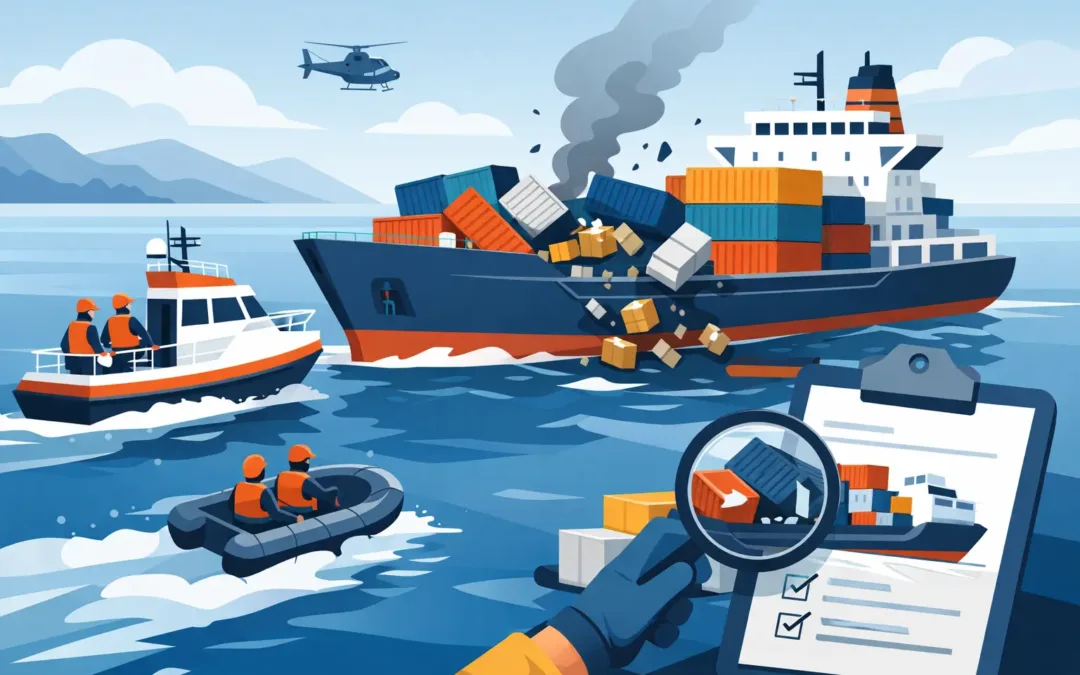
A marine incident response example is most useful when it shows the operational decisions made in the first hours, not merely the final survey report. Consider a bulk cargo discharge at a Gulf Coast terminal where the receiver identifies wet, caked material in several grabs. The vessel is on berth, discharge is continuing, commercial pressure is increasing, and the parties need independent facts before cargo is moved, blended, rejected, or disposed of.
This is where incident response becomes a controlled evidence process. The immediate objective is to protect people, cargo, the vessel, and the evidentiary record while allowing the principal parties to make informed decisions on mitigation and claims.
The Incident: Wet Cargo Found During Discharge
For this example, assume a geared bulk carrier arrives with a mineral cargo loaded overseas. The cargo appeared generally sound at loading, and voyage documentation records no reported cargo incident. During discharge, terminal personnel observe localized moisture, hardened material, and discoloration in cargo recovered from one hold.
The condition could result from several causes: pre-existing moisture in the cargo, rain exposure during loading or discharge, hatch-cover leakage, condensation, seawater ingress, improper ventilation, or an issue within the terminal handling system. At the time of discovery, none of those explanations should be treated as fact.
The initial error in many cargo incidents is allowing conclusions to form before the condition is documented. A statement that cargo is damaged is not a survey finding. The response must establish what was found, where it was found, how much was affected, and what evidence supports or excludes each potential cause.
First Response: Stabilize the Scene and Preserve Evidence
The attending surveyor should first confirm safe access and the status of cargo operations. If continuing discharge could mix affected cargo with sound cargo, obscure the location of the condition, or increase loss, the surveyor may recommend that the parties segregate the material and pause the relevant operation pending joint instructions. The surveyor does not direct the vessel or terminal, but provides an independent technical basis for operational decisions.
At this stage, contemporaneous records matter more than recollection. The surveyor records the date, time, berth, vessel particulars, hold number, weather, hatch status, discharge sequence, cargo appearance, and the identities of personnel present. Wide photographs establish the setting. Closer photographs document the cargo condition, hatch coamings, access covers, bilges, frames, and any visible staining or leakage paths.
Where practicable, the affected cargo should be clearly identified and kept separate from sound material. The terminal’s stockpile or receiving system must be traced so the scope of potentially affected cargo does not expand through commingling. If cargo has already entered a conveyor, hopper, warehouse, or storage pile, the response team needs to establish the time window and approximate quantity involved.
A surveyor should also request preservation of relevant records before they are overwritten or misplaced. These may include vessel logbook entries, cargo and ballast records, weather data, terminal discharge logs, crane or grab records, hatch-opening times, photographs taken by crew or terminal staff, and notices exchanged among the parties.
Establishing the Facts Through Joint Survey
A proper response normally proceeds as a joint survey with vessel interests, cargo interests, terminal representatives, insurers, and P&I correspondents notified as appropriate. Participation gives each party the opportunity to observe the condition and raise technical questions. It does not require agreement on cause.
The survey scope should be proportionate to the exposure. For isolated wet material, a visual condition survey, representative sampling, quantity estimate, and hatch inspection may be sufficient. Where the cargo is high value, the loss is widespread, or seawater ingress is suspected, the scope may need to include ultrasonic hatch-cover testing, hose testing where conditions permit, moisture analysis, chloride testing, bilge examination, tank sounding review, and a more detailed assessment of the vessel’s cargo spaces.
Representative sampling is particularly sensitive. Samples should be taken from affected and apparently sound areas using a documented method. Each sample container should be marked with its source location, date, time, and attending parties. A clear chain of custody is essential if laboratory results will later be relied upon in a claim, arbitration, or litigation.
The surveyor should distinguish between observed facts and technical opinions. For example, an observation may state that wet and compacted cargo was found along the forward port side of No. 2 hold. A preliminary opinion may state that the distribution is consistent with localized water exposure and warrants examination of adjacent hatch-cover compression bars, drainage channels, and structural boundaries. This disciplined wording protects the credibility of the report.
Testing the Competing Causes
The central question is rarely whether the cargo is wet. The question is when, how, and to what extent the cargo became wet.
If hatch-cover leakage is alleged, inspection should focus on gasket condition, compression, cleats, coaming edges, drainage arrangements, non-return devices, and evidence of prior repairs. An ultrasonic hatch-cover survey can identify potential points of water ingress without introducing water into the cargo space. It is often preferable where cargo remains on board or where a hose test would be operationally impractical.
Weather and operational history must be reviewed alongside physical evidence. Rain during discharge may affect exposed cargo near hatch openings, while seawater ingress may produce different distribution patterns or salt indicators. A wet patch below an area of damaged gasket may support one theory, but it is not definitive without considering stowage, ventilation, bilge condition, voyage weather, and loading practices.
Terminal causes also deserve equal scrutiny. Water from a shore-side hopper, leaking conveyor, open storage area, or contaminated truck can create damage that appears after the cargo leaves the vessel. Independent attendance should therefore extend beyond the hold when the cargo path indicates a possible shore-side source.
It depends on the cargo as well. Some commodities tolerate limited moisture variation without material loss of value. Others can self-heat, harden, corrode, contaminate, or fail contractual quality specifications after minor water exposure. The response plan must reflect the actual cargo characteristics, the sale contract, and the available mitigation options.
Quantifying Loss Without Overstating It
Once the affected material is identified, the parties need a defensible quantity. Depending on the cargo flow, this may involve tally records, weighbridge tickets, draft survey results, stockpile measurements, discharge rates, or reconciliation against bills of lading and terminal receipts.
A quantity determination should separate three categories where possible: cargo confirmed affected, cargo potentially affected but awaiting analysis, and sound cargo. Treating all cargo in a hold as a total loss may be commercially convenient, but it can distort the claim and make mitigation more difficult. Conversely, minimizing the scope before the evidence is complete can expose parties to later disputes.
Mitigation may include drying, screening, reconditioning, blending where contractually and technically acceptable, alternate sale, or controlled disposal. The surveyor’s role is to document condition and quantities and, where instructed, assess whether proposed handling measures preserve evidence and are reasonable in the circumstances. Commercial decisions remain with the cargo owner, insurer, and other responsible parties.
The Report: A Record Built for Scrutiny
The final report should give claims handlers and commercial managers a clear chronology from discovery through disposition. It should identify attendance, documents reviewed, weather conditions, cargo condition, tests performed, samples taken, quantity methodology, mitigation measures, and any limitations on the findings.
Photographs should be captioned and tied to locations. Statements from crew or terminal personnel should be identified as statements, not adopted as fact without corroboration. If causation cannot yet be determined, the report should say so directly and identify the additional evidence needed.
For a disputed matter, timely reporting is as valuable as technical depth. An initial factual notice may be needed within hours so insurers, P&I interests, charterers, and counsel can preserve their positions. A detailed report can follow once testing and document review are complete. The two-stage approach avoids both delay and premature conclusions.
What This Marine Incident Response Example Shows
The value of an independent marine response is not simply attendance at a damaged cargo scene. It is the ability to turn a fast-moving operational problem into a documented record that can support mitigation, recovery, defense, and commercial settlement.
When wet cargo, shortage, contamination, machinery damage, hatch failure, or a terminal incident is reported, early attendance creates options. A disciplined survey response can preserve the evidence that later determines whether the incident is a manageable exception or an avoidable claims dispute.
