
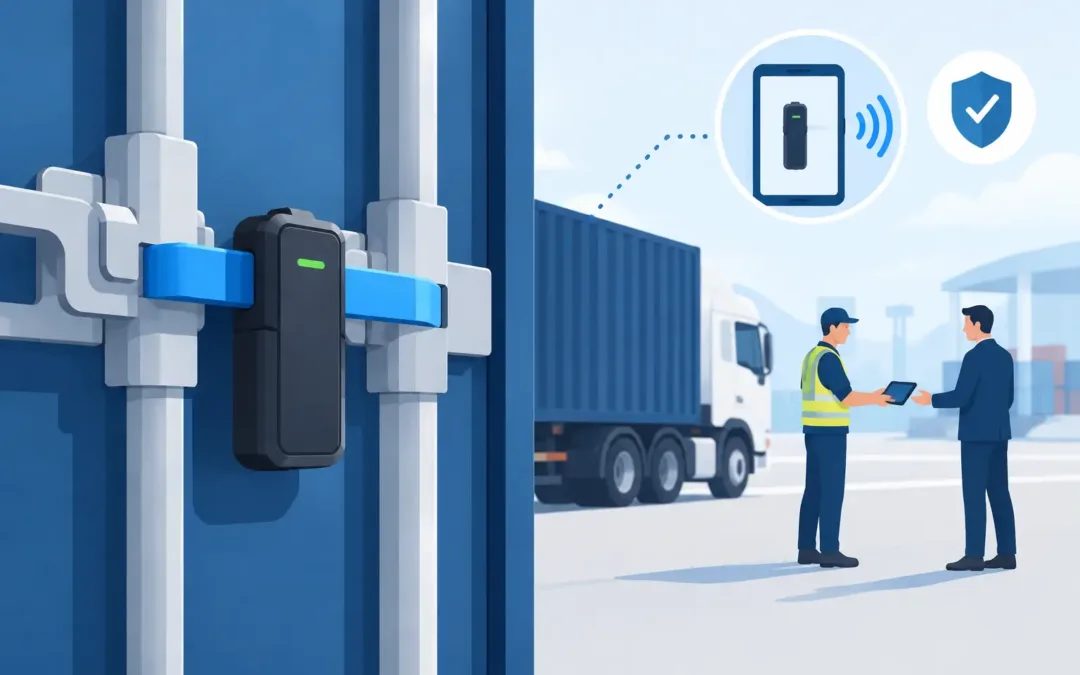
A container can remain physically intact at destination while its chain of custody is already in dispute. A missing handoff record, an unexplained door-opening event, or a seal number that does not match the shipping documents can quickly become a cargo, security, and claims issue. Electronic cargo seals provide event-based evidence that helps operators identify when a shipment was opened, moved, delayed, or exposed to an exception.
For cargo owners, carriers, terminals, and insurers, the value is not simply knowing that a seal was applied. The value is being able to establish what occurred between loading and delivery, then compare that record against gate data, vessel schedules, survey findings, and cargo documentation.
What Electronic Cargo Seals Actually Record
An electronic seal is a device placed on a container, trailer, railcar, hatch, or other secured cargo access point. Depending on the model and communications network, it may record seal application and removal, unauthorized opening, time stamps, location data, temperature, shock, light exposure, or changes in device status.
Some devices transmit data in near real time through cellular, satellite, Bluetooth, RFID, or other communications methods. Others store event data for retrieval at destination. That distinction matters. A real-time device may support immediate intervention after a security event, while a data-logging seal may only confirm the event after cargo has completed its movement.
The seal should be treated as one component of a broader cargo-control system. Its records become more useful when they can be reconciled with loading photographs, container condition reports, verified seal application, terminal interchange records, bills of lading, and out-turn survey evidence.
Where Electronic Cargo Seals Add Control
Electronic cargo seals are particularly useful on shipments with multiple custody transfers, extended inland transit, high-value commodities, theft-sensitive cargo, or elevated contamination exposure. They can also strengthen control where the cargo owner has limited visibility between origin packing and final receipt.
For a sealed container, a door-opening alert can identify an exception that requires prompt investigation. The response may include contacting the carrier or terminal, instructing the consignee to preserve the seal and container condition, arranging an independent survey, and documenting any cargo shortage, water ingress, contamination, or packaging disturbance before unloading proceeds.
For bulk, project, or breakbulk cargo, the technology may be applied differently. Electronic access controls, hatch sensors, geofencing devices, and cargo-space monitoring equipment may provide similar visibility, but their suitability depends on the cargo, voyage profile, vessel arrangement, and safety requirements. A device that works well on a dry container may not be appropriate for a wet, hazardous, refrigerated, or explosive environment.
A Seal Event Is Not a Cargo Finding
An opening event can establish that access occurred. It does not, by itself, prove theft, contamination, shortage, or damage. A container may be lawfully opened for customs examination, agricultural inspection, terminal screening, repair, or authorized transloading. Equally, a seal may remain intact even when cargo has sustained damage from improper stowage, condensation, temperature excursion, rough handling, or water ingress through a defective container or hatch cover.
This is where independent inspection remains necessary. A surveyor can document the physical condition of the seal, doors, locking bars, container structure, cargo packaging, dunnage, lashing, and cargo itself. Those observations help distinguish an operational exception from a compensable loss and preserve evidence before the shipment is altered by unloading, rework, or disposal.
Building a Defensible Seal-Control Process
Technology is most effective when the operating procedure is clear before the shipment moves. Applying a device without assigning responsibility for monitoring, escalation, and evidence preservation creates only partial control.
At origin, the responsible party should record the device identification number, conventional seal number where used, time of application, container or conveyance number, location, and the name of the person applying the seal. Clear photographs should show the installed device and the secured access point. If cargo condition, stuffing, lashing, or quantity may later be disputed, a pre-shipment or loading survey establishes a stronger starting record.
During transit, alerts should be directed to an accountable operations contact rather than an unattended portal. The escalation plan should state which events require action, who has authority to contact the carrier or terminal, and when a surveyor, insurer, or claims representative must be notified. Not every alert justifies a full incident response. A documented customs inspection at a declared location is different from an unplanned opening event outside an approved route or facility.
At destination, verification should occur before doors are opened or cargo is discharged. The receiving party should compare the seal and device status against shipping documents, examine the container or cargo access point for evidence of tampering, and record any discrepancy. Where there is a suspected breach, cargo damage, shortage, or contamination allegation, unloading should be controlled to preserve evidence. Tally verification, photographs, sampling where appropriate, and a condition survey may be required.
Selecting the Right Device for the Risk
The most expensive device is not automatically the most suitable one. The correct specification depends on cargo value, route, communication coverage, expected dwell time, mode of transport, environmental exposure, and the speed at which an alert can realistically be acted upon.
A device with GPS capability may be useful for high-risk inland moves, but GPS performance can be limited inside metal containers, stacked yards, warehouses, or below deck. Cellular transmission can be unreliable offshore or in remote regions. Satellite connectivity extends coverage but may add cost and power-management considerations. Battery life must also exceed the expected journey duration, including port delay, customs hold, or transshipment exposure.
Security classification requires equal attention. Certain shipments may require a high-security mechanical seal that meets contractual, carrier, customs, or supply-chain security requirements. An electronic device should not be assumed to satisfy those requirements unless its physical security rating and acceptance have been confirmed. In some cases, a conventional high-security bolt seal and an electronic monitoring device are used together.
Four practical questions should be answered before procurement or deployment:
- Does the device provide the physical deterrence and seal classification required for the shipment?
- Will it communicate reliably across the full route, including terminals, inland legs, and ocean transit?
- Who will receive, assess, and escalate exception alerts at all hours?
- Can the event data be retained and produced in a usable format if a cargo claim arises?
Data Quality Determines Claims Value
Electronic evidence is only as persuasive as its integrity. Time-zone settings, delayed transmissions, duplicate events, poor location accuracy, depleted batteries, and undocumented device replacement can complicate an otherwise straightforward incident. The data should identify the device, event type, event time, location where available, transmission status, and any user action taken after the alert.
For claims handling, preserve the original event log and avoid relying solely on screenshots or informal summaries. Retain device instructions, deployment records, photographs, communications with carriers or terminals, and all survey documentation. If a seal is removed following an incident, its condition and serial number should be documented before it is discarded.
The strongest evidence usually comes from alignment across several sources: a verified seal application record, transport milestones, device events, physical inspection findings, quantity verification, and contemporaneous notices to relevant parties. Where those records conflict, the discrepancy itself may identify the point that requires further investigation.
Electronic Seals and Independent Marine Surveys
Electronic seals do not replace cargo surveys. They make surveys more targeted when an exception occurs and can improve the evidentiary record around a loss. A surveyor can attend at origin to verify loading and sealing, at an intermediate point following an alert, or at destination to document out-turn condition and quantity.
This approach is especially valuable for time-sensitive cargo disputes. If an alert indicates possible unauthorized access, a rapid independent attendance can establish whether the device was activated by a legitimate inspection, a handling error, equipment failure, or an actual security breach. It can also document whether cargo condition supports the allegation being made.
Zeus Marine and Cargo Solutions can support this process through pre-shipment inspections, cargo condition and damage surveys, tally verification, out-turn surveys, and independent documentation where seal events create commercial or insurance exposure.
A seal alert should trigger disciplined questions, not assumptions. When the device record, physical evidence, and cargo documents are evaluated together, electronic monitoring becomes a practical control point that protects cargo interests long after the shipment has left the loading facility.
