
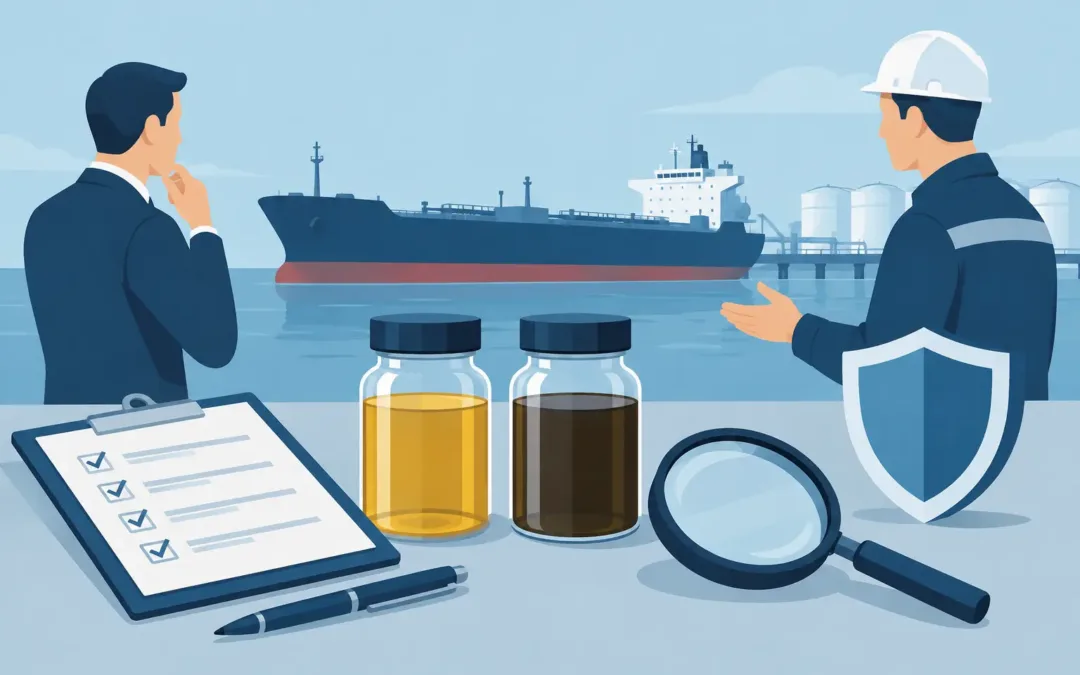
A bunker stem can appear routine at the manifold and become a high-value claim weeks later, after abnormal consumption, filter blockage, purifier overload, loss of propulsion, or an engine casualty. Bunker quality disputes are rarely resolved by a single laboratory result. The outcome usually turns on whether the parties can prove what fuel was delivered, how it was sampled, whether it met the applicable specification, and whether it caused the reported damage or operational loss.
For owners, charterers, suppliers, P&I interests, and insurers, the priority is not simply to obtain a test certificate. It is to establish an evidence trail that remains credible under contractual, technical, and claims scrutiny.
Why bunker quality disputes become difficult
Marine fuel is a complex, variable product. A fuel may meet some reported parameters while still create handling or combustion difficulties in a particular vessel, engine configuration, or operating condition. Conversely, a fuel that is outside a contractual limit may not be the direct cause of a subsequent machinery event. Those are different questions, and treating them as the same question can weaken a claim.
Most disputes involve one or more of four issues: representativeness of the sample, compliance with the purchase specification, the condition and handling of the fuel after delivery, and causation. The commercial pressure is immediate. Vessels may be delayed, fuel may need to be segregated or de-bunkered, and machinery repairs can generate substantial off-hire and operational costs. Yet early assumptions can compromise the evidence needed later.
The governing bunker supply terms matter as much as the reported laboratory values. The contract may identify the applicable ISO 8217 grade, establish testing tolerances, designate a laboratory, prescribe a claims notice period, or state which retained sample is binding. A technical finding must be assessed against those agreed terms rather than against a generic expectation of fuel quality.
The sample is the foundation of the claim
A laboratory can only report on the material it receives. If the sample was not drawn continuously and proportionally throughout the transfer, its result may not reliably represent the delivered parcel. Spot samples, samples drawn from an uncertain point, and samples with weak sealing or custody controls invite challenge.
A properly controlled drip sample should be collected at the vessel’s receiving manifold over the full delivery period, using clean and suitable equipment. The sample should be thoroughly mixed, decanted into appropriate containers, securely sealed, labeled, and distributed in accordance with the applicable supply terms. Each container should identify the vessel, supplier or barge, delivery location, date, grade, sample point, seal number, and the parties present.
The surveyor should document interruptions in the transfer, changes of barge tank, line flushing, unusual pumping conditions, and any disagreement over the sampling method. Photographs of the sampling arrangement, seal numbers, and handover process can be valuable, particularly when the validity of a retained sample is later contested.
MARPOL samples and commercial samples serve different purposes
The MARPOL delivered sample is a regulatory document sample associated with the bunker delivery note and fuel-oil compliance requirements. It is significant evidence, but it does not automatically replace the contractual commercial sample used to determine a quality claim. The parties should preserve both where available and clearly record their origin, custody, and intended purpose.
Confusion between these sample types can create avoidable arguments. A commercial claim should be built around the sample designated by the contract, while regulatory samples and records should be retained to support the broader factual record.
Testing should answer the right technical question
Routine analysis commonly addresses density, viscosity, water, sulfur, flash point, total sediment, aluminum plus silicon, used lubricating oil indicators, and other parameters relevant to the specified grade. Results should be reviewed as a set. A marginal result may have different operational significance when combined with high cat fines, elevated water, poor stability, or evidence of contamination.
Where initial results indicate a concern, further testing may be warranted. This can include compatibility testing against onboard fuels, detailed hydrocarbon analysis, chemical fingerprinting, metals screening, or investigation for specific contaminants. The appropriate scope depends on the symptoms reported and the vessel’s fuel system condition.
For example, high aluminum and silicon may support concern over catalytic fines, but an allegation of abrasive damage still requires evidence from filters, purifier discharge, engine components, operating records, and maintenance history. Likewise, a result suggesting contamination does not by itself establish that the contamination occurred before delivery. The investigation must consider receiving tanks, transfer lines, storage history, and commingling with remaining onboard fuel.
Preserving causation evidence after an incident
When machinery symptoms emerge, the vessel’s first obligation is safe operation. Segregating suspect fuel, documenting tank soundings, protecting remaining samples, and recording system conditions may be more useful than immediately consuming or transferring the fuel. Operational decisions should be recorded with clear times, quantities, and reasons.
The evidence package should connect the delivered fuel to the alleged consequence. That normally requires more than a bunker delivery note and a laboratory certificate. A defensible investigation will usually preserve:
- Bunker delivery documentation, tank allocation records, and sounding or ullage data
- Sealed retained samples with a documented chain of custody
- Laboratory reports, testing methods, quality-control data, and sample receipt details
- Engine-room logs, purifier and filter records, alarm history, and fuel changeover records
- Photographs, damaged parts, filter debris, and repair findings where a casualty is alleged
Timing matters. A vessel that changed tanks, blended fuels, or operated for an extended period before reporting symptoms may face a more complex causation analysis. That does not eliminate a valid claim, but it increases the need for disciplined records and independent technical review.
Independent attendance reduces avoidable disputes
An independent bunker surveyor can attend before, during, or after delivery to verify the practical controls that often determine whether a claim can be defended. This includes observing sampling, checking seals and labels, reviewing delivery documentation, verifying quantities where required, recording tank condition, and documenting exceptions in real time.
Independence is particularly valuable when the commercial relationship is already under strain. A factual survey report should distinguish observed conditions from statements made by ship’s staff, barge personnel, terminal representatives, or suppliers. It should avoid premature conclusions while preserving the information needed for later legal, insurance, or technical evaluation.
For deliveries in the Gulf Coast and other high-activity bunkering locations, short-notice attendance can make the difference between a documented exception and an unprovable allegation. Zeus Marine and Cargo Solutions can provide independent bunker quantity and quality survey support where prompt attendance, controlled sampling, and clear reporting are required.
Managing the dispute without prejudicing the claim
Prompt notice under the bunker supply contract is essential. Notices should be factual and timely, identify the relevant stem and samples, reserve rights, and avoid asserting causation before the evidence supports it. Retained samples should not be tested, released, or discarded without considering the contractual procedure and the other parties’ right to witness or nominate a laboratory.
There is also a commercial balance to manage. Taking fuel out of service may protect machinery but can disrupt voyage plans. Continuing to use a suspect fuel may preserve operational continuity but increase exposure if damage follows. The correct decision depends on test findings, the severity of onboard symptoms, available tank capacity, alternative fuel arrangements, manufacturer guidance, and the vessel’s immediate safety margin.
A well-managed claim begins before the first allegation. Establish sampling expectations in the supply terms, train crews on sample custody and recordkeeping, retain delivery records in an accessible format, and call for independent attendance when the delivery, fuel grade, or trading schedule presents elevated risk. When a question arises, preserve the facts first. Clear evidence gives technical experts, claims handlers, and commercial decision-makers a sound basis for the next move.
