
A wet, shifted, short-landed, or contaminated cargo claim is rarely decided by a single photograph or a disputed statement of events. The best marine claims evidence establishes condition, quantity, custody, causation, and timing in a form that can withstand scrutiny from insurers, P&I interests, charterers, terminals, cargo interests, and counsel.
For commercial stakeholders, the objective is not to create the largest file. It is to create a disciplined evidentiary record before the physical condition changes, the cargo moves, vessel spaces are cleaned, or the parties’ recollections begin to diverge. That work starts at the first report of a potential loss.
What Makes the Best Marine Claims Evidence
Marine evidence is strongest when it is contemporaneous, independent, traceable, and technically relevant. It must do more than show that damage exists. It should help establish where the loss occurred, what mechanisms could have caused it, whether reasonable mitigation took place, and how the claimed quantum was derived.
A clear survey report often becomes the central document because it connects field observations with the operational record. The surveyor can document cargo condition, packaging integrity, vessel or container condition, stowage, lashing, hatch-cover performance, water ingress indicators, temperatures, quantities, and segregations. Just as important, the report records what was not observed. That distinction can limit unsupported allegations later in the claim.
Independence matters. Internal reports, crew statements, terminal records, and carrier notices are necessary, but they are generally prepared by parties with an operational or commercial interest in the outcome. An independent survey does not replace those records. It verifies relevant facts, identifies inconsistencies, and preserves a defensible technical account.
Preserve the Scene Before Normal Operations Erase It
Cargo operations move quickly. A consignee may need to discharge, segregate, recondition, or dispose of affected goods. The vessel may sail on a schedule. A terminal may clean a berth or storage area. Those commercial pressures are real, but they also make early evidence preservation essential.
Issue timely written notice to potentially responsible parties and invite their attendance at the survey where contract terms or insurance procedures require it. The purpose is not to delay mitigation. It is to provide an opportunity for joint examination and reduce later arguments that a party was denied the chance to inspect.
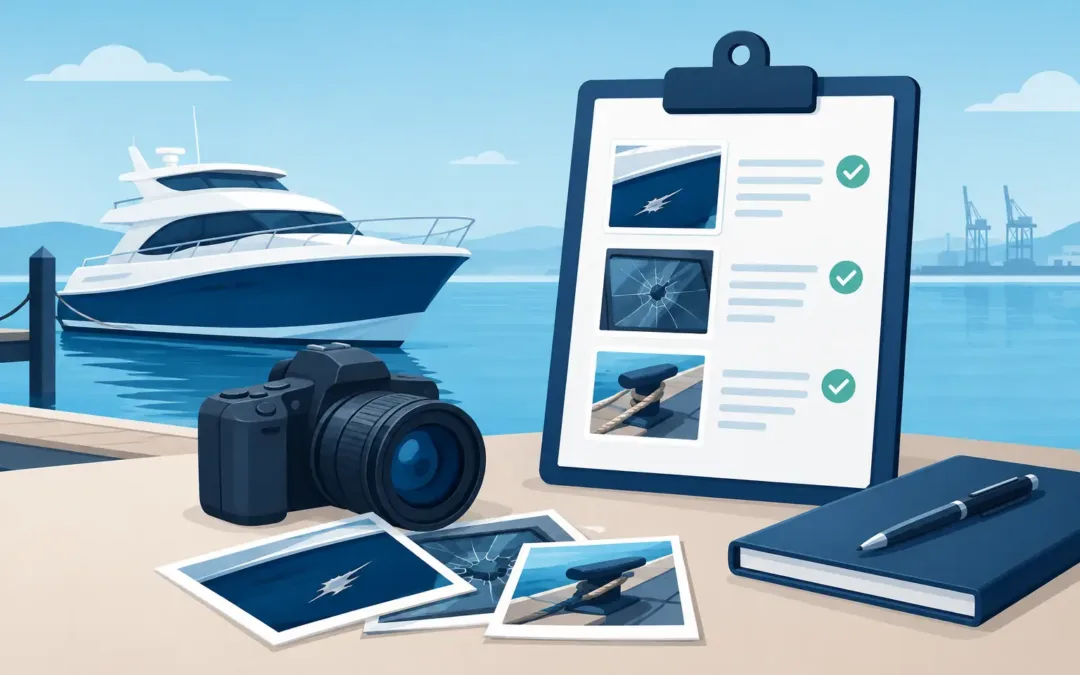
Photographs and video should be taken before cargo is shifted, packaging is removed, or areas are cleaned. Images need context. Wide shots should establish the location and overall condition, while closer images should capture carton markings, seals, waterlines, damaged lashings, fractured dunnage, corrosion patterns, contamination, or torn packaging. Time and location data, where available, should be retained with the original files.
Do not rely solely on annotated screenshots, compressed messaging-app images, or photographs separated from their source files. Those materials can be useful for immediate notification, but originals and a clear image log provide far greater evidentiary value.
Build a Record Around Condition, Quantity, and Custody
The most effective claims files answer practical questions in sequence. What was the cargo condition at handover? How was it packed and secured? What occurred during carriage or handling? When was loss first identified? Who had control at each stage?
Pre-shipment inspections, pre-loading surveys, tally records, draft surveys, and sealed-container records can establish the starting point. During transit and discharge, the relevant record may include stowage plans, lashing certificates, mate’s receipts, bills of lading, cargo manifests, temperature logs, ventilation records, hatch-cover tests, deck logs, weather data, notices of protest, and out-turn tallies.
The right documents depend on the cargo and allegation. A steel products claim may turn on rust condition, chlorides, wetting patterns, and ventilation history. A grain shortage dispute may require draft survey calculations, shore scale tickets, loading sequences, and trimming records. A refrigerated cargo file requires temperature data, set points, alarm history, airflow observations, and evidence of door openings or power interruption.
Quantity evidence deserves particular care. A commercial invoice alone does not prove a physical shortage. Independent tally verification, draft survey results, calibrated scale records, sounding reports, and documented measurement methodology carry more weight because they show how the quantity was determined. Any limitations, such as inaccessible holds, unreliable shore scales, or weather-related draft restrictions, should be stated rather than overlooked.
Chain of Custody Protects Physical Evidence
Damaged samples, failed components, contaminated residues, and packaging fragments can be decisive, provided their identity and handling can be demonstrated. A laboratory result is vulnerable if no one can show where the sample came from, when it was collected, how it was sealed, or whether it could have been altered.
A practical chain-of-custody record should identify:
- the item or sample and its precise collection location;
- the date, time, and person collecting it;
- the condition of seals and packaging;
- each transfer, storage location, and receiving party; and
- the test requested, laboratory used, and result issued.
Representative sampling must also be genuinely representative. Sampling only the worst-affected bags, drums, coils, or cartons may prove that damage exists but not the extent of the overall loss. A surveyor should document the sampling population, selection method, sample size, and any areas that could not be accessed.
Establish Cause Without Overstating It
Claims often weaken when reports confuse observation with causation. “Cargo was wet” is an observation. “Cargo was damaged by defective hatch covers” is a causation opinion that requires supporting facts.
A technically sound report separates observed conditions from reasoned conclusions. For example, fresh water staining concentrated beneath a hatch coaming, failed ultrasonic hatch-cover test results, wet dunnage, and rain entries in the deck log may support an ingress pathway. By contrast, uniform condensation within intact packaging could point toward sweat or temperature-related mechanisms. The available evidence may support more than one scenario, and a credible report should identify those limitations.
This is where vessel-condition evidence can be critical. Ultrasonic hatch cover surveys, hose testing where appropriate, inspection of drain channels and compression bars, cargo hold condition surveys, and machinery or reefer inspections may establish whether the vessel condition was compatible with the alleged cause. Equally, a finding that closures were sound can redirect attention toward loading condition, terminal exposure, packaging suitability, or post-discharge handling.
Avoid premature conclusions based on a single indicator. Rust, wet cargo, shortage, or package damage may have multiple causes across the transport chain. The claim record should test the plausible alternatives, not merely document the first allegation made.
Document Mitigation and the Claimed Amount
The duty to mitigate is operational as well as financial. Cargo may need prompt segregation, drying, rebagging, cleaning, reconditioning, sale at salvage value, or controlled disposal. Delayed action can increase loss, but undocumented action can make the original condition impossible to verify.
Before mitigation proceeds, document the affected quantity, condition grades, proposed treatment, expected recovery, and authorization path. Retain invoices, labor logs, warehouse records, disposal certificates, salvage bids, and sale returns. If damaged cargo is reconditioned, the file should show the quantity treated, yield obtained, cost incurred, and final disposition.
Quantum should be calculated transparently. A claim for the full invoice value may not be appropriate where goods retain a reduced market value or can be reconditioned. Conversely, a low salvage realization may not reflect actual value if the sale process was restricted or rushed. Survey evidence does not set the legal measure of damages, but it provides the factual foundation for a supportable valuation.
Coordinate the Right Survey Scope Early
There is no universal inspection package for every incident. A wet bulk cargo loss, container damage claim, bunker dispute, machinery casualty, and cargo shortage allegation each require a different scope. The right appointment is driven by cargo type, point of discovery, likely causes, contractual exposure, and the risk that evidence will disappear.
For a potential water-damage claim, a prompt cargo damage survey combined with hatch-cover testing and review of logs may be appropriate. For a shortage dispute, independent tally verification, draft survey work, and reconciliation of shipping and terminal records may be more valuable. For a cargo integrity allegation involving stowage, the survey should assess lashing, dunnage, segregation, ventilation, and loading practices before the arrangement is disturbed.
Zeus Marine and Cargo Solutions can deploy independent survey support on short notice when a casualty, cargo discrepancy, or vessel-condition concern requires a documented response. Early attendance is often the difference between a claim supported by evidence and a claim built on assumptions.
The practical standard is simple: preserve facts while they are still physical, measurable, and attributable. A well-scoped independent survey gives every stakeholder a clearer basis to mitigate the loss, assess liability, and make the next operational decision with confidence.
