
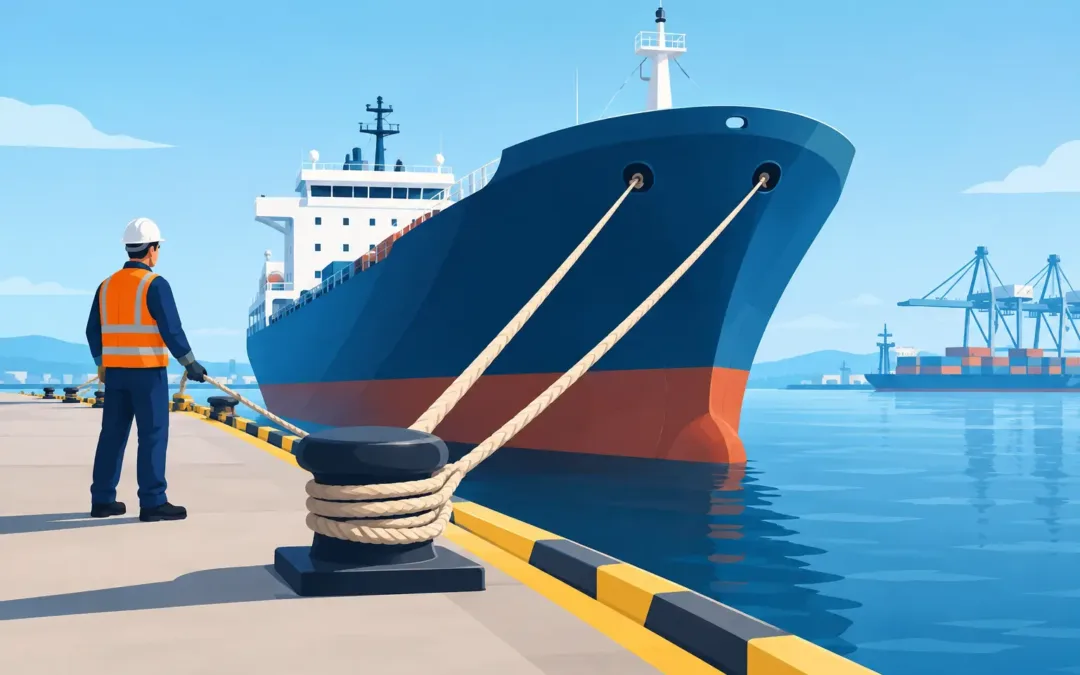
A vessel can complete cargo operations without a single handling incident and still face a major exposure at the berth. Parted lines, berth contact, excessive surge, and personnel injuries often begin with conditions that were visible before the first line was sent ashore. The best mooring practices treat mooring as an active risk-control process, not a routine deck operation completed on arrival.
For owners, charterers, terminals, and insurers, the objective is clear: maintain the vessel safely alongside while preserving evidence that the berth, equipment, weather limits, and watchkeeping arrangements were suitable for the operation. This requires disciplined planning, competent execution, and records that can withstand operational and claims scrutiny.
Mooring Is a Vessel, Berth, and Weather System
A safe mooring arrangement depends on the interaction of the vessel, berth, lines, winches, fenders, current, tide, wind, passing traffic, and cargo activity. Evaluating any one element in isolation creates a false sense of security. A berth may be acceptable in calm conditions but unsuitable when a strong cross-current combines with a falling tide, swell, or wash from passing vessels.
Before arrival, the vessel should obtain reliable berth information and compare it with the vessel’s mooring plan. This includes berth length, bollard or quick-release hook capacity, fender layout and condition, tidal range, expected current, exposure to weather, passing-vessel effects, and any terminal restrictions. Where conditions are unfamiliar or the berth is operationally sensitive, a pre-arrival discussion between the master, port agent, terminal, and pilot can identify limitations before they become time-critical.
The mooring plan must also reflect the anticipated duration of the call. A short port stay during stable weather may require a different level of contingency planning than a multi-day cargo operation through a forecast frontal passage. The arrangement must allow adjustment as draft, freeboard, tidal elevation, and environmental loading change.
Confirm equipment condition and compatibility
Mooring safety starts with equipment that is fit for service. Lines, tails, shackles, stoppers, chocks, fairleads, bitts, rollers, winches, brakes, and remote-release equipment should be inspected in accordance with the vessel’s planned maintenance system and applicable operating guidance.
Attention should focus on degradation that affects actual holding performance: chafing, broken strands, corrosion, heat damage, crushed sections, splice deterioration, distorted fittings, poor lubrication, and sharp contact points. Synthetic lines require particular care because internal damage and reduced residual strength may not be obvious from a brief external inspection.
Compatibility matters as much as condition. Mixing line types or substantially different elastic characteristics can produce uneven load sharing. Similarly, brake holding capacity, rendered tension settings, and line selection must align with the vessel’s approved mooring equipment data and the intended arrangement. Improvised substitutions may appear practical during a busy port call but can create an unquantified failure point.
Best Mooring Practices Before Lines Are Sent Ashore
A formal mooring risk assessment need not be burdensome, but it should be specific. Generic references to “adverse weather” or “strong current” do not help the deck team decide when to reinforce the arrangement, suspend cargo, or call for tug assistance. The assessment should identify the forces reasonably expected at that berth and the actions required if stated limits are approached.
The master and responsible deck officers should review the number and disposition of headlines, stern lines, breast lines, and springs; likely lead angles; bollard allocation; snap-back zones; communication methods; and the roles of each mooring party. Every crewmember involved must understand that standing in a bight, stepping over a loaded line, or entering an identified snap-back zone is unacceptable unless the task requires it and the exposure is controlled.
Clear communication is essential during the operation. Radio channels, hand signals, and commands should be agreed before work begins. Where language differences exist between vessel, shore gang, tug crew, and terminal personnel, the team should use simple standardized terms and confirm critical instructions. Assumed understanding is not a control measure.
Set the arrangement for effective load sharing
Lines should be led as fairly as possible through chocks and fairleads, avoiding unnecessary chafe and excessive vertical or horizontal angles. Breast lines principally resist offshore movement, while springs control fore-and-aft movement. An arrangement overloaded with one type of line may restrain the vessel under ordinary conditions yet perform poorly when surge or current develops.
Line tensions require regular review. Excessively tight lines can overload quickly as tide, draft, or vessel movement changes. Slack lines permit excessive movement and shock loading. The goal is not identical tension in every line at every moment, but balanced control that reflects the function, elasticity, and lead of each line.
Mooring lines should never be treated as permanent restraints. A vessel’s position alongside changes continuously with ballast operations, cargo transfer, tidal movement, and external forces. The arrangement needs active adjustment throughout the port stay.
Maintain a Competent Mooring Watch
Once cargo operations commence, the mooring watch becomes the first line of defense against gradual deterioration and sudden force changes. The watchkeeper should make rounds at intervals appropriate to the berth conditions and increase their frequency when weather, current, tide, or vessel traffic creates additional movement.
Each round should consider line condition and tension, winch status, brake condition indicators where fitted, chafing at leads, vessel position, fender contact, bollard condition, gangway safety, and changes in environmental conditions. Watchkeeping records should identify meaningful observations and corrective actions, not simply show that a round occurred.
A mooring watch also needs authority to escalate. If lines are repeatedly surging, fenders are bottoming out, a vessel is ranging along the berth, or environmental limits are nearing exceedance, the officer of the watch should promptly notify the master and terminal. Delayed reporting can turn a manageable condition into a line-failure or allision event.
Respond early to changing conditions
The correct response depends on the berth and vessel. It may involve adjusting the existing lines, adding lines where approved, relocating the vessel, adjusting ballast, suspending cargo, requesting tug support, or departing before conditions exceed safe limits. More lines are not automatically safer if leads are poor, shore fittings lack capacity, or the added lines create unequal loading.
Heavy-weather preparations should be based on forecast timing and local berth exposure. Decisions made while conditions remain manageable are generally more controlled than measures attempted after lines begin snatching. For Gulf Coast calls, rapid thunderstorm outflows, strong currents, and passing-traffic effects can require a higher level of watchkeeping even when the broader forecast appears favorable.
Terminal coordination is equally significant. Cargo arms, hoses, gangways, loading equipment, and shore personnel may all be affected by vessel movement. The vessel and terminal should share timely information on weather restrictions, operational suspension criteria, and the plan for securing the berth if conditions deteriorate.
Documentation Protects the Operational Position
When a mooring incident occurs, the immediate questions are often practical: What was the weather? Which lines were in use? When were they last inspected? Were the lines adjusted? Was the terminal notified? A contemporaneous record is more persuasive than a reconstruction prepared after damage is reported.
The vessel should retain relevant entries from the deck log, mooring station records, weather observations, tide or current data where available, communications with the terminal and port authorities, photographs, and maintenance records for the involved equipment. If a line parts or a berth-contact event occurs, preserving the failed line, associated fittings, and photographs of the scene may be critical to determining causation.
Independent attendance can be valuable where there is significant cargo exposure, an unusual berth arrangement, disputed weather conditions, suspected equipment failure, or a potential P&I claim. A competent marine survey can document the mooring configuration, equipment condition, line leads, environmental circumstances, and immediate damage before evidence changes or is removed.
Make Mooring Assurance Part of Port Readiness
The strongest mooring programs do not wait for a casualty to expose weaknesses. They connect pre-arrival planning, equipment inspection, crew competence, terminal communication, watchkeeping, and incident documentation into one controlled process. This approach supports safe cargo operations, but it also strengthens the vessel’s position when commercial or insurance questions arise.
Zeus Marine and Cargo Solutions can provide independent vessel inspections, P&I support, damage documentation, and operational review when a mooring condition, berth-contact event, or line failure requires prompt technical attention. The most useful intervention is often early attendance, while the arrangement, equipment, and evidence remain available for examination.
A well-managed berth is rarely the result of a single extra line or a last-minute adjustment. It is the result of crews and shore teams recognizing changing forces early, acting within defined limits, and recording what they observed before a routine port call becomes a preventable claim.
