
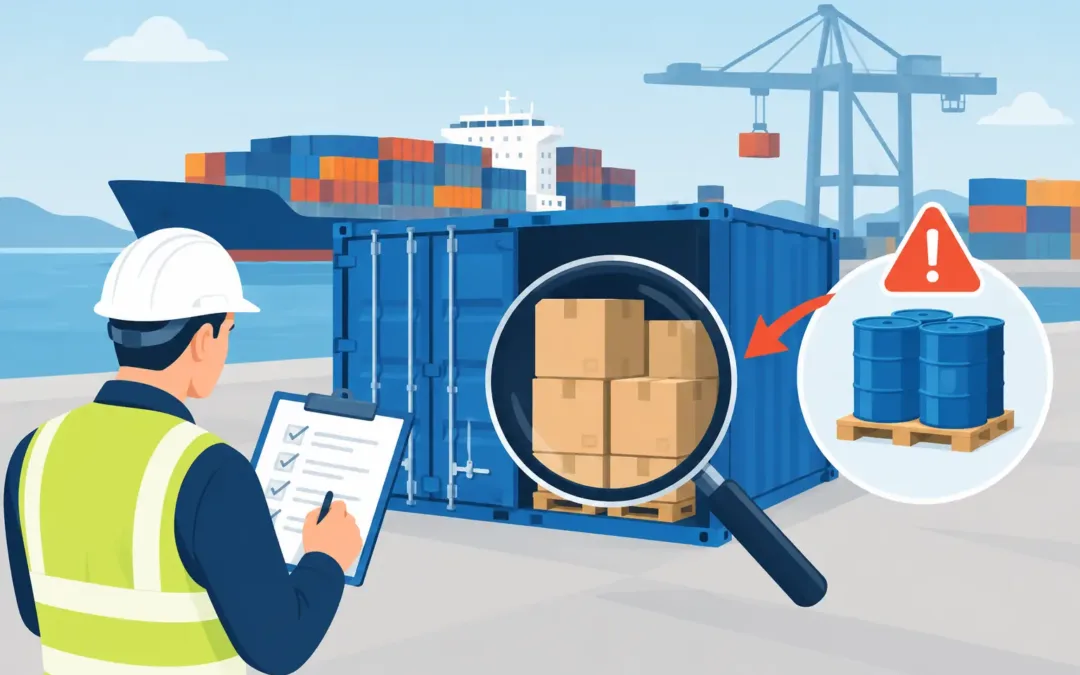
A container misdeclaration case example is most useful when it shows more than a paperwork error. The operational issue is the gap between what was declared at booking and what was actually packed, stowed, and presented for carriage. That gap can expose the vessel, terminal, crew, adjacent cargo, and cargo interests to a loss that may have been preventable with accurate declarations and timely independent verification.
Consider the following composite case based on recurring claim patterns in containerized trade. Names, ports, and quantities have been generalized, but the risk sequence reflects the evidence issues that commonly arise after a suspected cargo misdeclaration.
Container Misdeclaration Case Example: The Fire Incident
A shipper booked one 40-foot dry container as non-hazardous automotive parts for export from a Gulf Coast port. The booking data, commercial invoice, packing list, and bill of lading description identified the cargo as metal components with accessory materials. No dangerous goods declaration was submitted, and the container was accepted for standard dry-cargo handling.
During the voyage, crew observed elevated temperature readings and smoke escaping from the container area. The vessel activated its emergency response procedures, isolated the affected bay, and discharged the container at the first suitable port of refuge. The incident did not escalate into a vessel-wide fire, but several adjacent containers sustained heat, soot, and water damage. The vessel experienced schedule interruption, cargo operations were delayed, and salvage and inspection costs began accumulating immediately.
At out-turn, the container was found to contain lithium-ion battery packs and loose power units packed among the declared automotive components. Some packages showed signs of thermal damage. Preliminary records indicated that the batteries had not been declared, labeled, packaged, or documented in accordance with the applicable dangerous goods requirements.
The eventual dispute was not limited to whether batteries caused the incident. It concerned what was shipped, who knew the true nature of the cargo, whether the cargo had been properly prepared, whether the carrier and terminal had received enough information to plan safe stowage, and what evidence could establish the sequence of events.
Why the Misdeclaration Changed the Risk Profile
Container declarations support operational decisions long before the container reaches a vessel. A correct description allows the carrier to determine whether the cargo is acceptable, whether dangerous goods documentation is required, where the unit may be stowed, and whether segregation, ventilation, temperature controls, or emergency-response planning are necessary.
In this case, the container was treated as ordinary dry cargo. Had the lithium-ion batteries been properly declared, the shipment could have been reviewed for classification, state of charge, package integrity, marks and labels, required documentation, and compatibility with other cargo. The carrier might have rejected the booking, required repacking, imposed a different stowage plan, or accepted the unit subject to declared dangerous goods procedures.
Misdeclaration also changes the claims environment. A cargo interest may face recovery action for physical damage, general average contributions, salvage expenses, delay-related exposure, survey costs, and damage to third-party cargo. The precise allocation of liability depends on the contract of carriage, governing law, the facts, and the evidence. A finding that cargo was inaccurately declared can materially affect insurance coverage positions and contractual defenses.
The Evidence That Mattered Most
A defensible investigation begins by preserving evidence before cargo is moved, repacked, disposed of, or released. The first survey attendance should document the container exterior, seal condition, placards, markings, door-end data, location of damage, and any signs of leakage, smoke, scorching, deformation, or firefighting water ingress.
Inside the container, surveyors should establish the cargo arrangement as found. This includes photographs and video of the opening operation, dunnage, blocking and bracing, package labels, package counts, battery markings, damaged units, and the relationship between the suspected origin area and neighboring cargo. Where safety conditions permit, the examination should be conducted with terminal, vessel, cargo, and insurer representatives notified or given an opportunity to attend.
Documentation often determines whether technical findings can be tied to commercial responsibility. The core file should compare booking instructions, shipping instructions, cargo manifest, bill of lading, commercial invoice, packing list, dangerous goods declaration if any, verified gross mass records, container packing certificate, terminal gate records, and communications among the shipper, freight forwarder, consolidator, and carrier.
In the composite case, the invoice used broad wording that did not disclose batteries. The packing list referred to electronic accessories, while warehouse photographs obtained later showed battery cartons being loaded into the container. A review of the cargo supply chain also identified a third-party consolidator that had prepared the shipment. Those facts did not automatically resolve liability, but they narrowed the factual questions: who packed the container, who prepared shipping instructions, who had product-level knowledge, and whether any party changed the description before booking.
Preserving a Reliable Chain of Custody
Physical evidence can lose value quickly if it is handled informally. Damaged battery units, packaging remnants, and electronic devices may be central to cause analysis, but they can also create a continuing safety hazard. Each item retained for examination should be identified, photographed, logged, secured, and transferred under a documented chain of custody.
If laboratory testing is warranted, the protocol should define the samples, test objectives, parties invited to observe, and method for preserving representative material. A destructive examination performed without notice may later be challenged by an opposing party. Conversely, delaying all examination while evidence degrades can compromise the investigation. The practical approach is a controlled joint-survey process with clear written notices and safety controls.
Survey Scope After a Suspected Misdeclaration
The scope should match the loss scenario. A container fire or overheating event may require cargo condition and damage surveys, tally verification, container inspection, stowage review, vessel damage documentation, and a review of firefighting actions. If water was introduced during suppression, the survey should distinguish fire damage from water damage, smoke contamination, and corrosion risk.
For cargo interests, the immediate priority is often mitigating further loss while maintaining evidence. That may include segregating affected lots, isolating damaged batteries, arranging safe storage, recording temperature conditions, and obtaining preliminary disposition recommendations. For vessel interests and P&I stakeholders, attention may extend to shipboard response, stowage location, neighboring units, pollution concerns, crew safety, and cargo-related declarations received before loading.
Independent survey reporting should separate observed facts from opinion. A sound report records the date and place of attendance, parties present, container number, seal details, weather where relevant, condition observed, documents reviewed, measurements taken, samples retained, and limitations encountered. It should avoid prematurely stating that a particular party caused the incident unless the evidence supports that conclusion.
Practical Controls Before the Container Gates In
The most effective control is not a claim defense after discharge. It is a disciplined pre-shipment process that tests whether the commodity description reflects the cargo actually entering the container.
Shippers and forwarders should use product-level cargo descriptions rather than broad commercial terms such as parts, equipment, accessories, or samples. Those descriptions may be adequate for sales documents, but they are often inadequate for carriage risk screening. Where batteries, chemicals, aerosols, waste, powders, temperature-sensitive goods, or mixed products are involved, the booking team should obtain the technical information needed to determine classification and transport requirements.
Container packing deserves equal attention. A compliant commodity can still become a loss exposure if packages are damaged, poorly secured, exposed to heat sources, or mixed with incompatible materials. Pre-loading inspection and stowage review can identify compromised packaging, inaccurate marks, insufficient lashing, moisture exposure, and visible cargo that conflicts with the declared description.
Carriers, terminals, and NVOCCs also benefit from escalation triggers. Vague cargo descriptions, abnormal shipment values, inconsistent weights, last-minute booking amendments, and shipper resistance to product-detail requests should prompt additional review. These are not proof of misdeclaration. They are practical indicators that the declared cargo may require verification before acceptance.
What Claims Teams Should Request First
When a suspected misdeclaration is reported, time-sensitive instructions should go out before the container is opened or cargo is disturbed. Request preservation of the unit, cargo, packaging, seals, documents, CCTV where available, terminal gate records, and onboard stowage information. Notify potentially interested parties of the survey, while ensuring all inspection activity follows site safety and hazardous-material controls.
The first questions should be factual: What was declared? What was found? Who packed the container? When did each party receive cargo information? What documents changed, and why? These questions are more useful at the outset than assumptions based on the severity of the event.
A coordinated survey response can protect evidence, support safe cargo handling, and give insurers, P&I interests, carriers, and cargo stakeholders a common factual record. Zeus Marine and Cargo Solutions LLC can support short-notice cargo condition, damage, quantity, stowage, and documentation-focused survey assignments where container incidents require prompt independent attendance.
The strongest position in a misdeclaration dispute is built before the cargo is moved again: preserve the scene, compare the declaration with the physical cargo, and document every material discrepancy while the facts are still available.
