
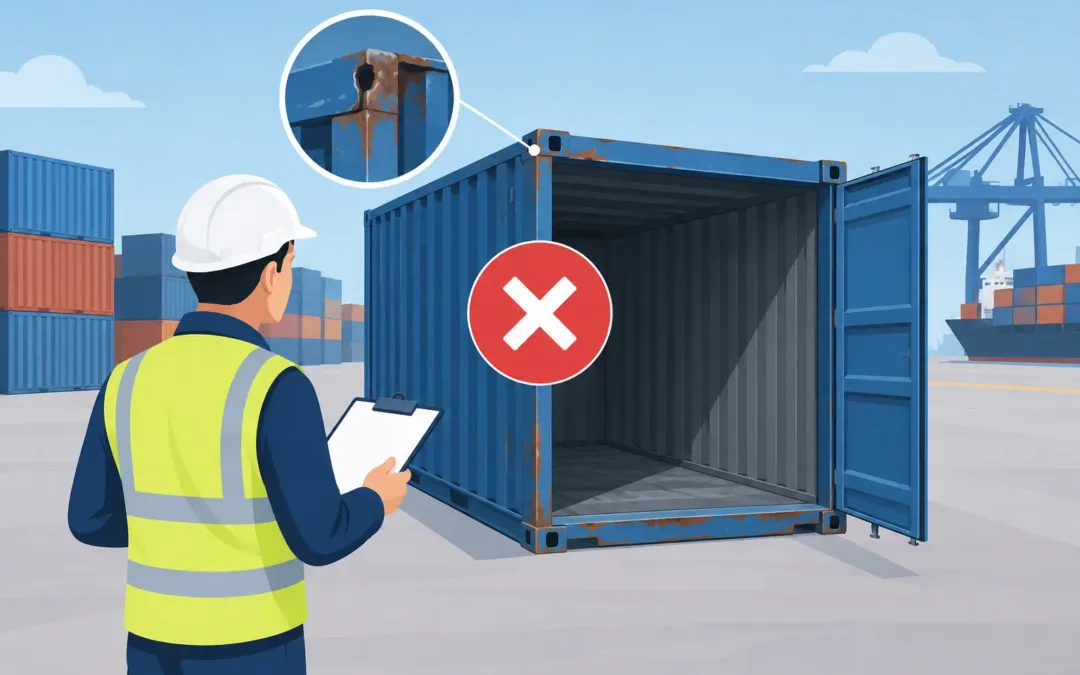
A container can look serviceable from the truck lane and still be unfit for the cargo, voyage, or contractual standard at hand. That distinction explains why containers fail inspection: the issue is rarely limited to visible exterior damage. A failed inspection may expose compromised cargo protection, unsafe handling conditions, noncompliant equipment, or documentation that cannot support a claim defense if loss occurs.
For shippers, carriers, charterers, terminals, and insurers, a rejected container is more than a short operational delay. It can disrupt a loading window, require cargo restuffing, create demurrage exposure, and weaken the evidence trail after a damage allegation. A disciplined pre-loading inspection identifies those issues while corrective action remains practical.
Why Containers Fail Inspection Before Loading
Container inspection standards depend on the cargo, route, customer requirements, and whether the unit is empty or already stuffed. A container accepted for general dry cargo may not be acceptable for food-grade products, steel coils, bagged commodities, sensitive machinery, or cargo requiring a dry, odor-free environment. Likewise, a unit with a valid CSC safety approval plate may still fail a cargo-worthiness inspection.
The most frequent failures fall into four connected categories: structural condition, weather integrity, cleanliness and cargo compatibility, and identification or documentation. An effective survey considers each category rather than treating the inspection as a quick visual walk-around.
Structural damage that affects safety or cargo protection
Dents and surface corrosion do not automatically make a container unserviceable. The assessment turns on location, severity, and whether the damage has affected the load path, frame geometry, or ability to secure and protect the cargo. Damage to corner posts, corner castings, top and bottom side rails, cross members, door frames, and floor bearers deserves particular attention.
A distorted corner post can interfere with stacking and lifting forces. A bent bottom rail or damaged cross member may reduce floor support, especially under concentrated loads such as machinery skids, paper rolls, stone, or palletized cargo. Forklift punctures in side panels and doors can admit water and provide evidence of poor prior handling. When damage is significant, a container may be rejected pending repair, even if its doors can still be closed.
Floor condition is equally critical. Broken boards, soft spots, delamination, exposed fasteners, oil contamination, or excessive prior nail holes can damage packaging and reduce load stability. For heavy or point-loaded cargo, survey findings should be tied to the proposed stowage plan, load distribution, dunnage arrangement, and securing method. The correct decision is not always rejection. Some units can be used safely with suitable load spreading and approved remedial measures, but that decision should be documented before stuffing.
Water ingress and failed weather integrity
Water damage claims frequently begin with a condition that was detectable before loading. Pinholes in roof panels, failed sealant, corroded seams, damaged door gaskets, and poorly seated doors can permit seawater or rainwater to enter during terminal storage or ocean transit.
Roof defects are especially easy to miss from ground level. Interior light testing may reveal openings, but it does not reproduce the pressure and water path encountered in service. Where the cargo value or moisture sensitivity warrants it, a hose test or Ultrasonic Hatch Cover Survey-style approach to air leakage assessment can provide a more meaningful indication of weather integrity. The method should fit the equipment and operational setting, with findings recorded clearly enough to establish the container’s condition before cargo was introduced.
Door gasket failure is another common cause of rejection. Gaskets that are torn, compressed, detached, painted over, or contaminated may not seal against the door frame. Damaged locking rods, cams, retainers, or hinges can prevent proper door closure and create a security concern as well as a water-ingress risk.
Contamination, odor, and unsuitable prior use
A dry container is not necessarily clean or cargo-worthy. Residue from prior cargoes, loose debris, wood splinters, animal evidence, chemical staining, mold, and offensive odors can all justify rejection. The required standard depends on the commodity. A container suitable for industrial products may be wholly unsuitable for foodstuffs, pharmaceuticals, consumer goods, bagged agricultural commodities, or odor-sensitive materials.
Inspectors should look beyond the center of the floor. Contamination often remains in floor grooves, beneath door sills, around corner areas, and on interior roof panels. Grease or oil on the floor can migrate into packaging or make forklifts and personnel less stable during stuffing. Strong chemical or organic odors may indicate previous cargo residues that cannot be resolved with superficial sweeping.
The right remedy also depends on the condition. Loose debris may be cleaned and reinspected. Embedded contamination, persistent odor, or unknown chemical residue generally calls for container substitution. Loading first and relying on liners or packaging to solve an unsuitable-container condition transfers avoidable risk to the cargo interest.
Seal, marking, and documentation failures
Physical condition is only part of the inspection record. A container may fail acceptance because its identifying marks are unclear, its CSC plate is missing or invalid, the container number does not match the shipping instructions, or the seal arrangement does not meet the shipment’s security requirements.
Container numbers should be legible and consistent across the equipment, booking, packing records, photographs, and survey report. A transposed digit can become a material dispute if cargo condition, shortage, or delivery allegations arise later. The same discipline applies to seal numbers. The seal should be appropriate for the movement, correctly applied, recorded at the time of sealing, and photographed where required by the cargo interest or insurer.
Documentation should distinguish observed facts from assumptions. It should identify the container number, location, date and time, weather if relevant, exterior and interior condition, floor condition, door and gasket condition, visible repairs, seal details, and any corrective action directed before loading. Photographs should be clear, time-correlated where available, and sufficient to show both the defect and its location within the unit.
Inspection gaps that create preventable failures
Some containers fail because no one established the inspection scope before equipment arrived. A generic condition check may miss cargo-specific requirements, while a rushed inspection after stuffing limits available remedies. The most reliable process begins with the cargo characteristics: weight, dimensions, moisture sensitivity, contamination sensitivity, value, packaging strength, and securing needs.
A pre-loading inspection should also be coordinated with the planned stowage and lashing arrangement. For example, heavy machinery may require confirmation of floor capacity and bearing points. Steel products may require dry floors, suitable dunnage, and protection against movement. Bagged cargo may require clean, dry surfaces and adequate separation from container walls where condensation is a concern. There is no single pass-fail standard that serves every commodity.
When a deficiency is found, the survey record should state whether the container was rejected, repaired, cleaned, accepted with limitations, or replaced. This protects all parties from an ambiguous decision made under loading pressure. It also supports later recovery efforts by showing that the risk was identified and addressed before the cargo entered the transport chain.
A defensible approach to container acceptance
The strongest container inspections are performed early enough to preserve options and thoroughly enough to support commercial decisions. That means inspecting before cargo arrives where possible, verifying the container again immediately before stuffing when conditions can change, and documenting the final seal and loaded condition at handover.
For high-value, moisture-sensitive, heavy-lift, or claim-prone shipments, independent attendance provides a clear record of equipment condition, cargo handling, stowage, lashing, and sealing. Zeus Marine and Cargo Solutions can provide pre-shipment and pre-loading survey support when short-notice inspection coverage is required.
A container should not be accepted merely because it is available. It should be accepted because its structural condition, weather integrity, cleanliness, identification, and suitability for the intended cargo have been verified and recorded before the voyage begins.
