
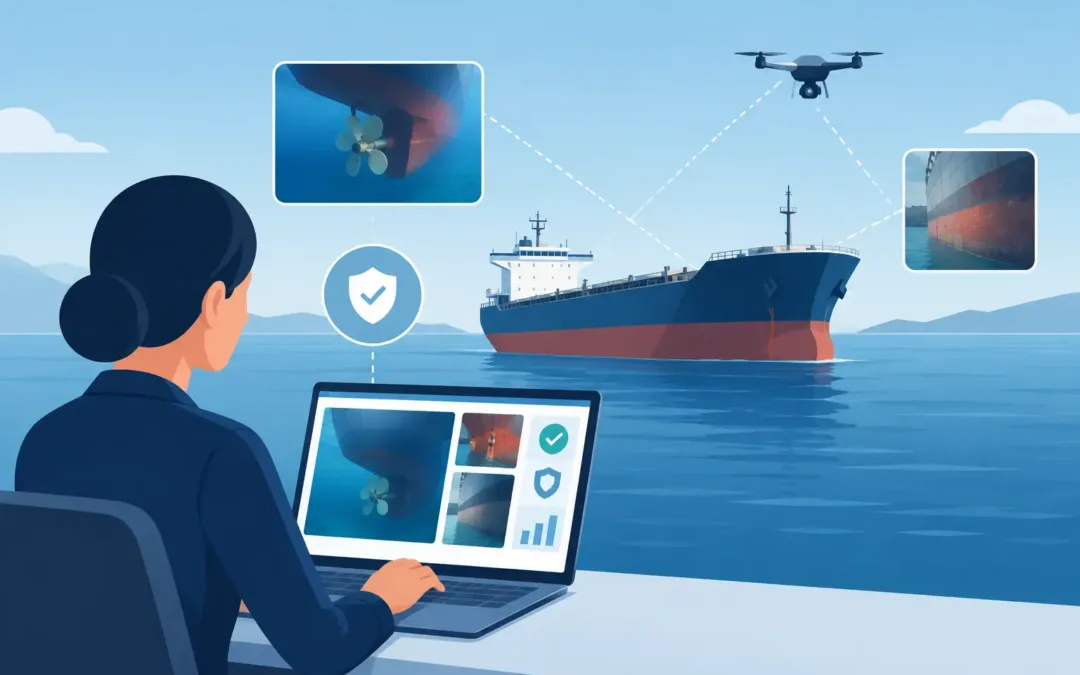
A vessel can be alongside, offshore, or awaiting clearance while a commercial decision cannot wait. Remote vessel surveys provide a controlled way to obtain timely visual evidence, verify specific conditions, and support risk decisions when an attending surveyor cannot immediately reach the vessel. Used correctly, they reduce delay without lowering the standard for documentation.
They are not a substitute for every physical attendance. A disputed cargo shortage, suspected structural defect, machinery failure, or condition survey for a high-value transaction may still require an independent surveyor on board. The value of a remote assignment is in identifying what can be reliably observed, recording it under a disciplined protocol, and escalating promptly when the evidence points to a physical inspection.
When Remote Vessel Surveys Are the Right Tool
Remote attendance is most effective when the objective is narrow, the required observations are accessible by video or photographs, and the person operating the device can follow clear instructions. This often applies to preliminary condition assessments, hatch-cover closing and water-hose test observations, cargo hold readiness reviews, lashing checks, bunker line and tank gauge observations, damage triage, and post-incident fact gathering.
For owners and operators, the immediate benefit is speed. A superintendent or designated crewmember can walk the surveyor through an affected area while the surveyor directs camera position, lighting, measurement references, and the sequence of observations. For insurers, P&I correspondents, and claims handlers, the process can preserve early evidence before repairs, discharge operations, or changing weather alter the condition in question.
The limitation is equally important. Video can show a crack, corrosion, a wet cargo hold, or damaged securing equipment. It may not establish plate thickness, material loss, causation, internal machinery condition, or cargo quantity with the certainty required for a final finding. The survey scope must state what was observed remotely, what was reported by shipboard personnel, and what remains unverified.
Defensible Evidence Depends on Survey Control
A remote survey is not simply a video call from the deck. Its credibility depends on preparation, direction, and records that allow another party to understand exactly what was seen and when.
Before the session, the attending surveyor should define the assignment purpose, the compartments or equipment to be inspected, the documents required, and the evidence standard. The vessel should receive practical instructions on connectivity, device availability, lighting, personal protective equipment, and safe access. If a cargo hold, ballast tank entrance, or elevated structure is involved, shipboard safety procedures remain in force. Remote observation does not remove confined-space, work-at-height, or permit-to-work requirements.
During the session, live video is preferable for critical observations because it permits the surveyor to request additional angles and challenge an unclear view in real time. Still images remain valuable where detail matters, particularly when they include scale references, frame numbers, timestamps, and a recognizable location. Measurements should show the instrument, the point measured, and enough surrounding context to identify the feature.
The resulting report should distinguish between direct visual observations, crew statements, vessel records, and surveyor conclusions. This separation is essential in claims, charter-party disputes, and insurance reviews. A concise report with clear limitations is more defensible than a broad conclusion unsupported by the available evidence.
A Practical Remote Survey Workflow
The process begins with a defined instruction, not a generic request to inspect the vessel. The instructing party should identify the commercial question: Is the cargo space fit to receive product? Is the reported damage recent and operationally significant? Are hatch covers closing correctly before loading? Is an immediate physical attendance necessary?
The surveyor then develops an inspection plan around that question. For a cargo hold condition review, this may include the hold number, tank top, bulkheads, frames, bilge wells, ladders, hatch coamings, drainage arrangements, and evidence of prior cargo residues. For a lashing review, the plan may focus on securing points, twist locks, turnbuckles, bridge fittings, lash-bar condition, and visible tension or alignment concerns.
A controlled remote assignment generally requires five records:
- the survey instruction and agreed scope;
- the date, time, vessel position, and participants;
- live video or recorded visual evidence, where permitted;
- photographs, measurements, and relevant vessel documents; and
- a report identifying findings, limitations, and recommended next actions.
This structure protects all parties. It prevents a preliminary remote review from being treated later as a full pre-purchase survey, class-related inspection, or final causation analysis when it was never intended to serve that purpose.
Applications That Benefit From Immediate Visibility
Damage triage is one of the strongest uses of remote attendance. Following contact damage, heavy-weather movement, cargo shift, water ingress, or suspected contamination, early imagery can help determine whether the affected area should be isolated, whether cargo operations should pause, and whether a surveyor or technical specialist must mobilize. The first hours matter because cleaning, repair, discharge, or routine operations can remove critical evidence.
Remote hatch-cover observations can also support operational decisions. A surveyor can observe closing sequences, compression bar contact, gasket condition, cleat engagement, drain channels, and accessible signs of leakage. However, a remote review cannot automatically replace an ultrasonic hatch cover survey performed with calibrated equipment and a qualified attending team. Where watertight integrity is in dispute or cargo exposure is material, physical testing remains the stronger method.
For bunker-related concerns, remote observation may help document gauge readings, seals, sampling arrangements, line condition, or the sequence of transfer operations. It is less suitable as the sole basis for a final bunker quantity determination where tank soundings, calibration tables, density, trim, and independent verification are central to the calculation.
Remote surveys also have value before a physical mobilization. An initial review can help the instructing party deploy the right expertise, whether that is a cargo surveyor, marine engineer, electrical specialist, marine adjuster, or HSEQ auditor. This can save time and avoid sending an improperly scoped resource to a developing casualty.
Where Physical Attendance Remains Necessary
The decision should turn on consequence, not convenience alone. If the findings may determine liability, seaworthiness, cargo acceptance, significant repair scope, or a substantial insurance recovery, a remote survey should usually be treated as an initial stage rather than the final inspection.
Physical attendance is generally warranted when the work requires calibrated instruments, close examination of inaccessible areas, independent sampling, precise quantity calculations, nondestructive testing, or verification that cannot be adequately controlled through a camera. It is also necessary when vessel personnel cannot safely access the area, connectivity is unreliable, or the available images are incomplete.
A useful rule is simple: use remote evidence to preserve the facts, direct the response, and assess urgency. Use physical attendance when the decision requires a higher level of certainty than video can provide.
Selecting an Independent Remote Surveyor
The remote process is only as effective as the surveyor directing it. Commercial parties should look for marine personnel who understand the operational context of the evidence, not merely the technology used to transmit it. A surveyor should be able to recognize when a reported condition is inconsistent with the observed scene, request meaningful records, and identify the point at which further inspection is required.
Independence also matters. Clear reporting, disciplined image handling, and defined evidence custody help preserve confidence among owners, charterers, cargo interests, insurers, and legal teams. Zeus Marine and Cargo Solutions can coordinate remote review with on-site attendance when a matter develops beyond the limits of virtual observation, including short-notice assignments across U.S. ports and international trade routes.
Remote survey capability should therefore be built into incident and operational planning before the next delay, access restriction, or casualty occurs. When the record is directed by a qualified marine surveyor and the limits are stated plainly, remote evidence can turn an uncertain report from the vessel into a timely, supportable decision.
