
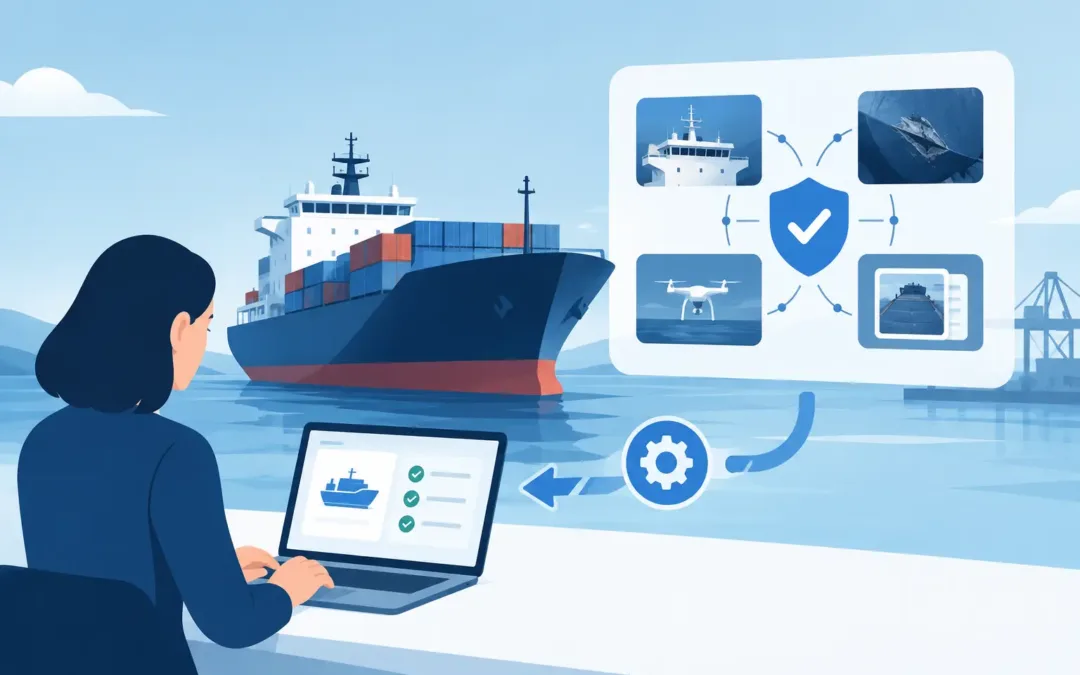
A cargo damage file can lose value long before a claim reaches adjustment. Photographs without timestamps, samples without custody records, tally sheets that do not reconcile, and delayed survey attendance all create uncertainty that counterparties will exploit. Marine claims automation can reduce those gaps, but only when it is built around disciplined evidence collection rather than administrative speed alone.
For vessel owners, cargo interests, insurers, P&I clubs, and claims handlers, the objective is straightforward: establish what happened, quantify the exposure, preserve the evidence, and move the file toward a supportable commercial decision. Automation can improve each stage. It cannot replace the independent surveyor’s observations, technical judgment, or ability to intervene at the terminal, aboard the vessel, or during cargo handling.
What Marine Claims Automation Should Actually Do
Marine claims automation is the structured use of digital workflows, connected records, rules-based task routing, and reporting tools to manage a marine loss or damage matter from first notice through resolution. In practice, it should create one controlled claim record that follows the incident from notification to survey appointment, evidence capture, analysis, reserve support, recovery activity, and closure.
The strongest systems do not simply convert emails into tickets. They establish a usable chronology. A notice of wet damage, for example, should trigger a defined response sequence: identify the cargo and location, preserve affected packages, appoint an independent surveyor, obtain voyage and handling records, document condition, assess probable cause, and notify the appropriate interests. Each action needs an owner, a deadline, and an auditable record.
This matters especially where several parties hold different pieces of the factual record. The carrier may hold stowage plans and logbook entries. The terminal may hold discharge records and CCTV retention information. The cargo receiver may control access to damaged stock. A surveyor may hold the condition report, photographs, measurements, samples, and witness statements. Automation brings those inputs into a controlled process before records disappear or positions harden.
Speed Is Valuable, but Evidence Controls Come First
Claims teams often measure automation by cycle time. Faster acknowledgment, quicker assignment, and automated reminders are useful. However, a rapid workflow that accepts incomplete or unverified information can create a clean-looking but weak file.
A defensible workflow distinguishes between reported facts, observed facts, and conclusions. A consignee’s description of “container damage” is a reported fact. A surveyor’s photographs, seal verification, package count, moisture readings, and examination of the container are observed facts. A conclusion regarding seawater ingress, condensation, pre-existing damage, or handling impact must show the reasoning and evidence that support it.
That distinction is central to claims scrutiny. If a matter proceeds to recovery, arbitration, or litigation, the record must demonstrate when evidence was obtained, by whom, under what conditions, and whether it was preserved without alteration. Automation should reinforce that chain of custody through timestamped uploads, role-based access, version control, and documented changes to reports or estimates.
The first-notice workflow sets the quality standard
The first notice of loss is where many avoidable disputes begin. A structured intake should capture the bill of lading reference, vessel and voyage, container or cargo identifiers, commodity, shipment terms, port or terminal location, alleged damage, date discovered, parties notified, and immediate mitigation actions.
The system should also identify what may be time-sensitive. Refrigerated cargo may require temperature data and urgent condition assessment. Bulk cargo may require draft survey data, shore scale records, samples, and stockpile segregation. Steel products may require rapid inspection before cleaning, processing, or onward delivery changes the condition. Wet damage may require packaging preservation and an early determination of whether water was fresh, salt, or cargo-related.
Not every claim requires the same response. Low-value, well-documented shortages may be suitable for a streamlined workflow. A contamination allegation, machinery casualty, fire exposure, or suspected hatch-cover failure requires a more controlled escalation path. Good automation applies the correct level of process to the risk rather than treating every notice alike.
Where Automation Adds Real Operational Value
Marine claims involve repetitive coordination tasks that should not depend on manual email chasing. Automated assignment can identify the appropriate survey discipline, geographic coverage, and response priority. For a short-notice cargo condition survey in a Gulf Coast port, that can mean the difference between inspecting cargo in the state found and arriving after repacking or disposal has begun.
Document control is another high-value application. A claim file may include bills of lading, mate’s receipts, cargo manifests, tally records, terminal interchange reports, temperature logs, deck logs, loading plans, lashing certificates, survey reports, invoices, salvage records, and correspondence. Automation can request missing documents, flag inconsistent identifiers, and place records into a chronology that an adjuster or legal team can review quickly.
Rules-based workflows can also improve reserve discipline. When a survey identifies an affected quantity, the system can route the file for valuation support, mitigation review, and recovery assessment. That does not mean a system should set a reserve without human approval. Marine losses often turn on policy terms, contractual defenses, salvage value, market conditions, and causation issues that require experienced review.
For recurring cargo programs, trend reporting can be equally useful. Claims data may reveal repeat wet-damage allegations on a specific trade lane, shortages at a terminal, elevated breakage for a packaging configuration, or recurring seal discrepancies. Those patterns can inform pre-shipment inspections, pre-loading surveys, stowage reviews, and operational corrective action before another loss occurs.
The Limits of Automated Decision-Making
Automation is not a substitute for technical causation analysis. A platform can identify that several shipments sustained corrosion damage. It cannot reliably determine whether the cause was inadequate packaging, condensation, saltwater ingress, defective container condition, prolonged terminal storage, or a hatch-cover integrity failure without complete evidence and qualified examination.
The same limitation applies to quantity disputes. A variance between shipping documents and discharge figures may arise from measurement method, density assumptions, vessel trim, scale calibration, tally practice, cargo loss, or simple clerical error. Draft surveys, shore tank measurements, and bunker quantity assessments require field methodology and professional judgment. Digital forms can standardize the record, but they do not perform the survey.
There is also a confidentiality issue. Claim files may contain commercially sensitive contracts, pricing, legal advice, personal information, and privileged communications. Any automation program needs access controls, retention rules, approval gates, and clear separation between factual survey evidence and protected legal or claims strategy materials. Convenience should not widen access to sensitive records.
Building a Survey-Ready Claims Process
The best marine claims workflow begins before a loss occurs. Stakeholders should agree on notice procedures, escalation contacts, survey appointment authority, document requirements, evidence retention instructions, and reporting formats. When a cargo receiver calls after discovering damage, the team should not be deciding for the first time who can appoint a surveyor or whether samples must be retained.
A survey-ready process also defines what the independent report must address. Depending on the matter, this may include cargo identity, packaging condition, quantity verification, extent of damage, segregation, mitigation measures, probable cause, photographs, measurements, witness accounts, relevant documents reviewed, and recommendations for further examination. The report should record limitations plainly. If inaccessible cargo could not be inspected, or records were unavailable, the file must say so.
Integration should be practical rather than ambitious for its own sake. Claims systems, document repositories, terminal data, vessel tracking, and insurer platforms can be connected where that reduces duplication and improves accuracy. Yet a poorly governed integration can spread incorrect data faster. Validate critical identifiers and preserve the original source record when information is imported.
A Better Measure of Claims Performance
Closed-file speed is not the only performance measure. A stronger standard asks whether the file preserved the condition of the cargo or vessel, documented mitigation, established a reliable chronology, supported coverage and liability analysis, and provided sufficient evidence for recovery or defense.
That standard changes how teams evaluate marine claims automation. The technology earns its place when it shortens response times without compressing the investigation, reduces administrative friction without weakening controls, and gives decision-makers a clearer view of technical facts. For complex casualties, the process must make it easier to deploy the right survey expertise early, not harder.
When loss, damage, quantity, or vessel-condition issues arise, the most useful workflow is the one that gets qualified eyes on the evidence while it still exists. Zeus Marine and Cargo Solutions supports that objective through independent surveying, documentation, and rapid-response marine expertise when a claim requires field-based facts rather than assumptions.
