
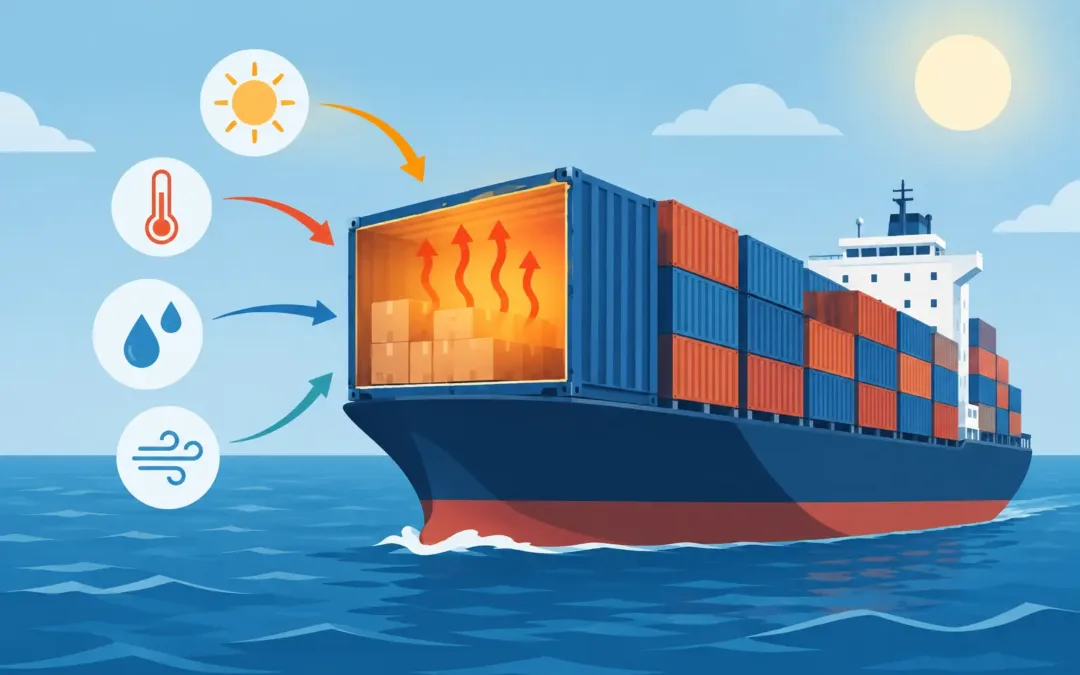
A cargo temperature reading that rises between loading and discharge is not simply a quality concern. It can be the first measurable sign of fire, gas evolution, package failure, contamination, or a developing cargo claim. What causes cargo heating depends on the commodity, its condition at shipment, the shipboard environment, and how the cargo has been handled and stowed.
For owners, charterers, cargo interests, terminals, and insurers, the critical question is not whether a cargo is warm. It is whether the temperature increase is expected, stable, explainable, and within the limits established by the cargo declaration, carriage instructions, and applicable regulations. Independent evidence gathered early can determine whether the issue is a manageable condition or an escalating casualty.
What Causes Cargo Heating in Transit?
Cargo heating generally results from an internal reaction, exposure to an external heat source, or a combination of both. The most serious cases involve self-heating, where the cargo generates heat faster than that heat can dissipate. A large stow can retain heat at its center, allowing the reaction to accelerate even when temperatures at the surface appear acceptable.
The principal drivers are moisture, oxygen availability, ambient temperature, cargo composition, contamination, particle size, and stowage geometry. A cargo that is safe when dry, cool, and loosely handled may become hazardous after rain exposure, delayed loading, compaction, or confinement in a poorly managed hold.
Oxidation and Self-Heating
Oxidation is a common source of cargo heating. Organic materials, carbonaceous products, oils, and some metal-bearing cargoes can react with oxygen and release heat. In a small quantity, that heat may dissipate without consequence. In a deep, compact stow, insulation created by the cargo mass can retain heat and promote further reaction.
Coal is a familiar example. Freshly mined coal can oxidize during storage and voyage, particularly where fines, high volatile content, elevated loading temperature, and long storage periods are present. The concern is not only heat. Oxidation may also generate carbon monoxide, making atmospheric monitoring and safe access controls essential.
Other cargoes with self-heating potential include charcoal, carbon products, fishmeal, seed cakes, oilseed meals, biomass products, and certain agricultural residues. Their behavior varies considerably by grade, moisture condition, oil content, age, and contamination. A cargo name alone is not enough to assess the risk.
Moisture, Microbial Activity, and Biological Decomposition
Moisture often turns a marginal cargo condition into a serious heating event. Wet agricultural products, feed ingredients, wood products, and organic bulk cargoes may support microbial activity. As bacteria, yeast, or fungi metabolize organic matter, they generate heat, carbon dioxide, and water vapor.
This creates a compounding cycle. Heat encourages biological activity, while moisture migration can wet adjacent portions of the stow. The resulting cargo damage may include mold, caking, discoloration, odor, loss of nutritional value, or spontaneous combustion in advanced cases.
Rain during loading, wet conveyor systems, leaking storage areas, and condensation are recurring sources of excess moisture. Moisture can also be inherent to the cargo, which is why representative sampling, moisture determination, and review of loading records matter before the hatch covers are closed.
Chemical Reaction With Water or Air
Some commodities heat because they react directly with water, humidity, or air. Direct reduced iron and related metallic cargoes can react with water to produce heat and hydrogen gas. The risk requires close attention to cargo classification, manufacturer guidance, packaging or stowage requirements, moisture exclusion, and gas monitoring.
Other cargoes may hydrate, polymerize, or react after contamination by incompatible substances. Fertilizers, chemicals, metal turnings, and industrial residues can require commodity-specific controls. Applying a generic ventilation practice to a reactive cargo can be unsafe. The shipper’s declaration, Safety Data Sheet, cargo schedule, and voyage instructions must be reviewed together rather than treated as separate documents.
Stowage Conditions That Make Heating Worse
A cargo may have an inherent tendency to generate heat, but vessel and terminal operations often determine whether that tendency remains controlled. Poor segregation, excessive stow depth, restricted airflow, and inadequate temperature surveillance can allow a localized hotspot to develop without early detection.
Heat from adjacent sources is also relevant. Cargo stowed near heated fuel tanks, engine-room boundaries, steam lines, or other warm spaces can begin the voyage at an elevated temperature. Solar exposure on deck cargo or containers may produce similar effects. External heating does not always create a self-heating reaction, but it can initiate or accelerate one.
Compaction is another factor. Fine or granular cargoes stowed densely may trap heat and restrict air movement. Conversely, ventilation can increase oxygen supply to cargoes that oxidize. The correct approach is cargo-specific. More ventilation is not automatically safer, particularly for commodities prone to oxidation or those carried under controlled-atmosphere instructions.
Moisture Migration and Condensation
Temperature differences within a hold create vapor movement. Warm, moist air can migrate toward cooler surfaces and condense, often under hatch covers or along ship-side plating. This is sometimes described as cargo sweat or ship sweat, but the distinction matters in a claim investigation.
Condensation damage may be caused by normal voyage temperature changes, inadequate ventilation management, wet cargo loaded at origin, hatch-cover leakage, or a combination of these factors. Where cargo heating is present, internally generated heat can intensify vapor movement and make the moisture pattern more difficult to interpret.
A disciplined survey should document the cargo’s temperature profile, moisture condition, stowage location, visible mold or caking, hatch-cover condition, ventilation records, weather during loading, and any evidence of water ingress. Photographs alone rarely establish causation.
Warning Signs That Require Prompt Investigation
Heating events usually develop through indicators rather than a single dramatic failure. A persistent temperature increase, a temperature difference between areas of the same stow, unusual odor, vapor, visible sweating, hardening, discoloration, or elevated gas readings should trigger a focused response.
For bulk cargoes, readings taken only at the surface can be misleading. The core of a stow may be significantly hotter than accessible margins. The monitoring method must be suitable for the commodity and safe for personnel. Opening holds, disturbing cargo, or introducing air without a risk assessment may intensify oxidation, release hazardous gases, or expose personnel to an unsafe atmosphere.
The following conditions typically warrant immediate review by the vessel, cargo interests, and survey team:
- A material upward trend in temperature rather than a stable reading
- Carbon monoxide, hydrogen, oxygen depletion, or other abnormal atmosphere results
- Smoke, haze, hot spots, or an unusual burnt, sour, or rancid odor
- Wet, caked, moldy, or discolored cargo near a temperature anomaly
- Evidence of hatch-cover leakage, rain exposure, incompatible contamination, or heating from an adjacent space
Prevention Begins Before Loading
The strongest control is to identify heating risk before the cargo enters the vessel. This starts with a complete cargo declaration that accurately identifies the commodity, grade, moisture condition, hazard classification, carriage requirements, and any temperature or gas-monitoring instructions.
Pre-shipment inspection can confirm stockpile condition, exposure to rain, signs of spontaneous heating, packaging integrity, contamination, and suitability of loading equipment. For cargoes with known self-heating behavior, loading temperature should be measured at representative locations, not inferred from ambient weather or a single reading.
During loading, the stowage plan should account for segregation, hold suitability, proximity to heat sources, ventilation instructions, and access for monitoring where appropriate. Hatch-cover testing and inspection are particularly relevant where moisture-sensitive cargoes are involved. A watertight hold does not cure wet cargo loaded at origin, but undetected leakage can substantially worsen a developing condition.
Documentation is equally important. Time-stamped temperature readings, weather records, sampling protocols, cargo certificates, loading photographs, protest correspondence, ventilation logs, and hold-condition reports create the factual record needed to manage operational decisions and later claims.
Survey Evidence When a Heating Claim Develops
Once a heating concern is reported, the objective is to preserve safety and establish causation without disturbing the cargo unnecessarily. An independent cargo survey can record the condition at first notice, verify temperatures and gas readings, assess the extent and distribution of affected cargo, examine potential moisture sources, and review vessel and terminal records.
Cause may rest with cargo quality at origin, moisture introduced before or during loading, vessel condition, improper ventilation, delay, external heat exposure, or multiple contributing factors. A defensible finding should distinguish observed facts from assumptions and identify what additional testing is required. Laboratory analysis, moisture testing, gas monitoring, thermal mapping, and review of samples retained at loading may be necessary.
When the cargo is valuable, hazardous, or already producing claims exposure, rapid attendance matters. Zeus Marine and Cargo Solutions can provide independent survey support for cargo condition, damage documentation, hatch-cover integrity, quantity verification, and time-sensitive marine claims work.
Cargo heating should be treated as an active risk signal, not a routine discharge exception. Early measurement, commodity-specific controls, and clear independent documentation give commercial parties the best opportunity to protect people, cargo value, and the evidentiary record.
