
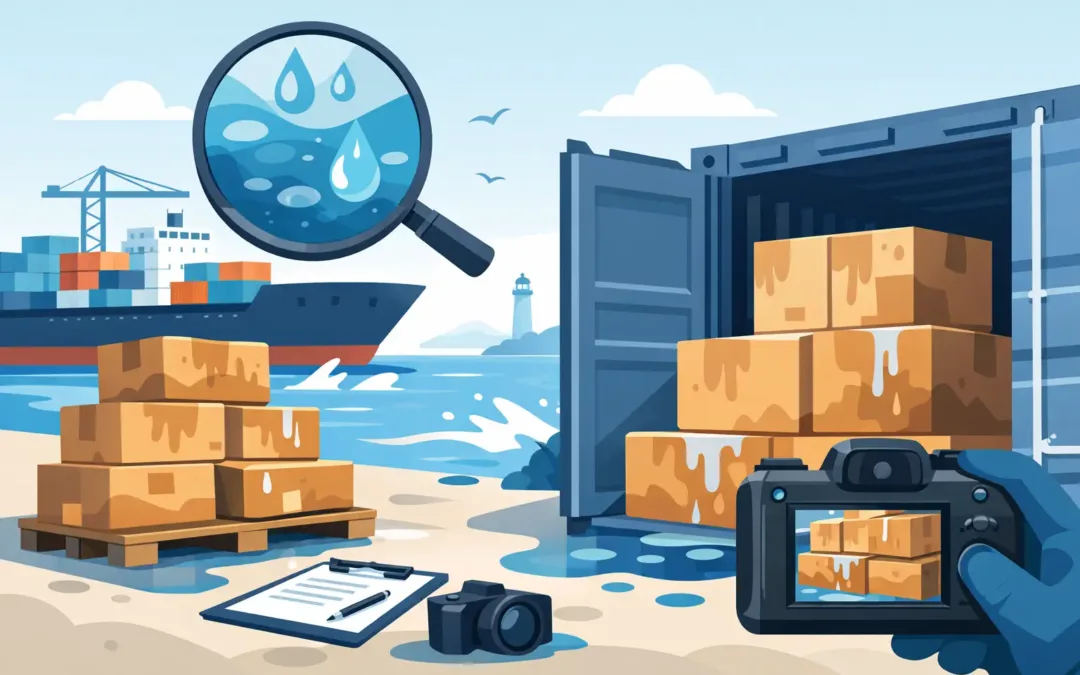
Water-stained cartons, swollen bags, rusted steel, or damp holds can become a major cargo claim within hours. Knowing how to document wet damage correctly protects the evidentiary record before cargo is moved, dried, segregated, or disposed of. The objective is not merely to show that water was present. It is to establish the cargo’s condition, the extent of damage, the likely source and timing of water ingress, and the actions taken to mitigate further loss.

For vessel owners, charterers, cargo interests, insurers, P&I correspondents, terminals, and claims handlers, a defensible wet-damage file begins at first notice. Delayed attendance or poorly controlled handling can erase evidence that later determines liability.

Secure the Scene Before Evidence Is Lost

The first priority is safety. Do not enter a flooded hold, container, warehouse area, or enclosed space until access conditions have been evaluated. Standing water, unstable stowage, electrical hazards, mold exposure, and restricted access may require vessel personnel, terminal safety staff, or qualified surveyors to control the area before an inspection begins.

Once access is safe, preserve the condition found. Avoid moving cargo until the initial condition has been recorded, except where immediate action is required to prevent injury, pollution, cargo collapse, or escalating damage. If cargo must be shifted or removed urgently, document the reason, the party authorizing the action, the time, and the condition of each affected unit before movement where practicable.

Issue prompt notice to relevant parties under the applicable contract and claims protocol. Depending on the circumstances, this can include cargo interests, vessel interests, charterers, underwriters, P&I representatives, terminal operators, carriers, and surveyors. Early notice supports joint attendance and reduces later disputes over whether the condition was observed independently.

How to Document Wet Damage at First Attendance

A wet-damage survey should establish a clear timeline. Record the date and local time of attendance, location, vessel name or container number, voyage details, cargo description, bill of lading references, seal numbers, hatch or compartment identification, and the names of personnel present.

The initial notes should distinguish observed facts from opinions. For example, “water droplets observed on the underside of hatch cover panels above Hold No. 2” is an observation. “Hatch cover leakage caused the damage” is a preliminary conclusion that may require further testing and review.

Record the condition of the access point before opening wherever possible. For containers, photograph the exterior, door gaskets, locking bars, corner posts, roof, side panels, vents, floor area, and seals. For breakbulk or bulk cargo, document hatch covers, coamings, compression bars, drainage channels, tarpaulins, access covers, and visible signs of pooling or runoff.

Weather information matters, but it must be specific. Note current weather, recent rainfall, sea conditions if relevant, and operational events such as loading during rain, discharge interruptions, hatch openings, flooding, fire-fighting activity, or washing operations. Obtain available vessel logs, terminal records, stowage plans, loading records, and rain stoppage reports as soon as possible.

Photograph the Condition Systematically

Photographs are among the most persuasive forms of evidence, but only when they show context as well as detail. A close-up of a wet carton may prove moisture exposure. It will not, by itself, show where the carton was stowed, how many units were affected, or whether the water pattern corresponds with a leak above, a wet floor below, or exposure during handling.

Begin with wide-angle views of the vessel hold, container interior, warehouse bay, or cargo parcel. Progress to medium-range images that show stow position, tiers, rows, pallets, dunnage, packaging, and adjacent cargo. Then capture close-ups of staining, tide marks, mold, softened packaging, corrosion, broken bands, wet labels, and water droplets.

Use a scale, measuring tape, numbered marker, or survey board in close-up images when practical. Photograph identifying marks, package numbers, lot codes, container numbers, seal numbers, and damaged cargo references clearly. Keep photographs in sequence and retain original files with metadata intact. Edited or compressed images may be useful for circulation, but they should not replace the original image set.

Video can be valuable for showing the route from the access point to affected cargo, active dripping, pooling water, or the condition of hatch-cover drainage arrangements. Narration should be factual and restrained. State what is visible, where it is located, and the time of recording.

Identify the Pattern, Source, and Extent of Water Exposure

Wet damage rarely presents as a uniform condition. The distribution of moisture can provide critical evidence. Damage concentrated in upper tiers may indicate roof, hatch-cover, or condensation issues. Damage at the bottom of a stow may indicate bilge water, floor-level ingress, poor drainage, or wet dunnage. A localized vertical pattern may correspond with a leaking seam, vent, or hatch-cover area.

Document whether the water appears fresh, salt, oily, rusty, dirty, or contaminated. Note odor, color, sediment, residue, and any visible sheen. Do not assume the source from appearance alone. Saltwater testing, chloride testing, pH testing, laboratory analysis, or comparison sampling may be necessary, particularly where causation affects a substantial claim.

Measure the affected area and quantify the cargo involved. Record the number of wet units, their positions in the stow, the number of apparently sound units, and the total quantity at risk. For bagged cargo, note wetness by tier, stack face, and pallet. For steel products, record the location and character of corrosion, packing condition, and whether protective wrapping has failed. For packaged commodities, distinguish superficial wetting from saturated packaging, product contact, mold growth, or compromised saleability.

Where cargo is discharged, tally the affected units separately from apparently sound units. This supports loss quantification and prevents damaged cargo from being mixed into inventory without traceability.

Preserve Samples and Maintain Chain of Custody

Sampling can be decisive when the type of water or degree of contamination is disputed. Samples should be collected only under an agreed protocol and with suitable clean containers, labels, and protective equipment. Each sample label should identify the location, date, time, sampler, sample type, and relevant cargo or compartment reference.

A proper chain of custody records every transfer of the sample from collection through delivery to the laboratory. It should identify who handled the sample, when custody changed, how the sample was sealed, and where it was stored. Without this record, opposing parties may challenge whether the analyzed sample represents the condition found.

Consider collecting comparison samples where appropriate. These may include water from bilges, deck drains, ballast areas, container floors, hatch-cover drainage channels, rainwater accumulation, or unaffected cargo packaging. The right sampling scope depends on the cargo, suspected source, accessibility, and the claim issues under review.

Review the Records That Explain the Event

Photographs alone do not establish the full sequence of events. Supporting records may reveal when the cargo was loaded, whether it was exposed to rain, how it was stowed, whether hatch covers were tested, and when the issue was first reported.

Relevant records often include bills of lading, mate’s receipts, cargo manifests, stowage plans, tally sheets, loading and discharge logs, hatch opening records, deck logs, weather records, port logs, terminal interchange reports, container inspection reports, reefer or data-logger records, and notices of exception. For vessel-related allegations, review hatch-cover maintenance history, ultrasonic hatch-cover survey results, prior defect reports, and crew records related to water ingress or bilge conditions.

Maintain a document register showing the source and date of each record received. If records are unavailable, note that fact in the survey file rather than leaving a gap that may later be misunderstood.

Separate Mitigation From Cause Determination

Cargo often needs immediate intervention. Wet units may require segregation, ventilation, reconditioning, drying, repacking, salvage assessment, or controlled disposal. These actions can reduce the loss, but they may also alter the evidence. Document the condition before mitigation, the mitigation method used, who authorized it, and the resulting condition afterward.

Do not allow a reasonable mitigation step to be interpreted as an admission of liability. Likewise, do not delay necessary protective action solely to preserve evidence. The appropriate balance depends on cargo sensitivity, the level of contamination, food or pharmaceutical requirements, marketability, safety exposure, and the availability of joint survey attendance.

A survey report should clearly separate factual findings, test results, records reviewed, observed damage, mitigation actions, and opinions on probable cause. Where the evidence is incomplete, state the limitation directly. A disciplined report is more credible when it identifies what cannot yet be concluded.

Build a Report That Can Withstand Claims Scrutiny

The final report should enable a claims handler, insurer, legal team, or commercial principal to understand the event without visiting the scene. Include a concise instruction scope, attendance details, cargo identification, survey methodology, chronological findings, photo log, measurements, sample register, documents reviewed, damage quantification, mitigation status, and conclusions supported by the evidence.

Avoid broad statements such as “cargo was water damaged throughout” unless every unit was inspected and the extent supports that conclusion. Precision matters. State whether damage was observed on specific tiers, lots, pallet positions, container sections, or cargo parcels. Identify whether the condition was visible, concealed, progressive, or subject to further laboratory or salvage review.

For time-sensitive cargo incidents, prompt independent attendance can preserve the evidence needed to assess liability and recover value. The strongest wet-damage record is built while the cargo, water source, stowage arrangement, and operating conditions can still be examined together.