
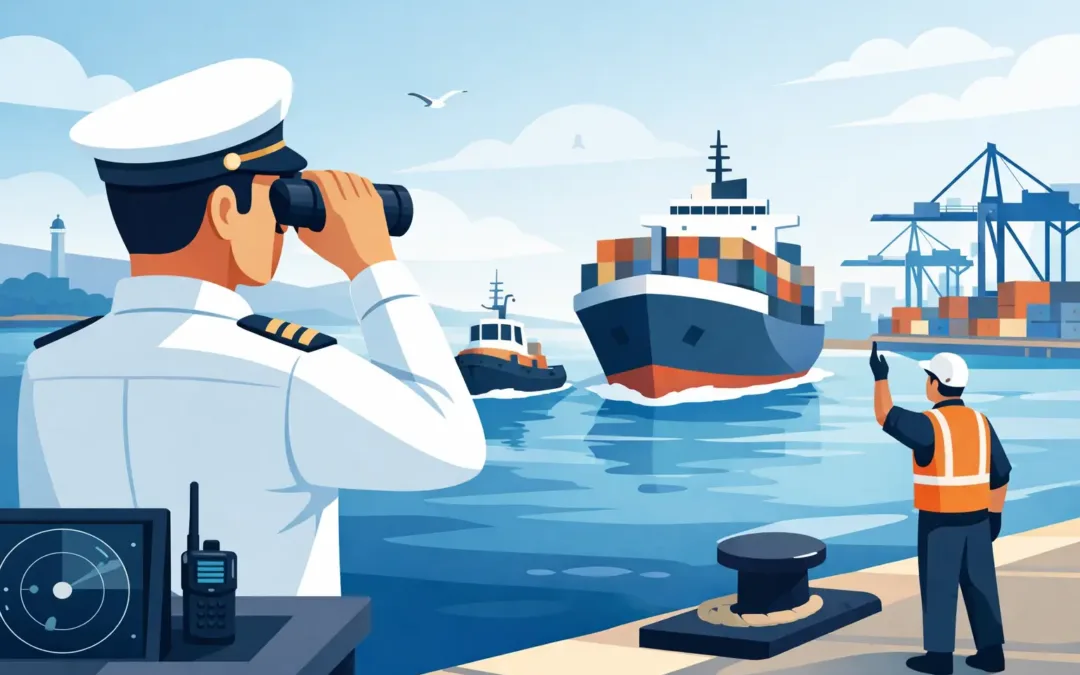
A port call can move from routine to high exposure in a single shift. Berth restrictions, cargo readiness, weather, draft limits, terminal practices, and crewing decisions all converge within a narrow operating window. Port captain services provide the experienced local oversight needed to protect the vessel, cargo, schedule, and contractual position when those conditions must be managed in real time.
For owners, operators, charterers, cargo interests, and marine insurers, the value is not simply having another representative on the quay. A competent port captain brings operational authority, independent judgment, and clear reporting to activities where a poor decision can create delay, damage, off-hire exposure, personal injury, or a difficult claims file.
What Port Captain Services Cover
Port captain assignments vary by trade, vessel type, cargo, and the reason for attendance. In practical terms, the role is focused on controlling operational risk before and during a port call. The port captain reviews the vessel’s readiness, observes critical operations, identifies conditions that require correction, and records facts that may later matter to commercial or insurance interests.
This may begin before arrival. A pre-arrival review can address cargo plans, stowage requirements, port restrictions, berth suitability, draft and air-draft limitations, tug needs, weather forecasts, hold condition, hatch cover integrity, and the availability of terminal equipment. Where the vessel is calling at an unfamiliar terminal or loading a sensitive cargo, early intervention gives the operator more options than a corrective response after berthing.
During the call, the port captain may attend pilotage, berthing, loading, discharge, bunker operations, hold inspections, tank soundings, draft surveys, lashing checks, and departure preparations. The scope should be defined in the appointment instructions, but it must remain flexible enough to address developing conditions. A damaged coaming, a disputed tally, contaminated cargo, unsafe shore equipment, or an unexpected terminal delay can quickly expand the required work.
Why Independent Port Oversight Matters
The master remains responsible for the vessel’s safe operation, and terminal personnel remain responsible for their own facilities and processes. A port captain does not replace either function. The independent role is valuable because it adds a focused operational review without the pressures that can affect parties trying to keep cargo moving.
Commercial urgency is often where risk enters the operation. A terminal may want to continue loading despite unsuitable weather. A chartering schedule may create pressure to accept marginal lashing arrangements. A cargo receiver may challenge shortage figures before all measurement evidence has been secured. In each case, the correct response depends on the facts, applicable procedures, and the vessel’s condition – not simply on the cost of delay.
Independent attendance also strengthens the evidentiary record. Timely photographs, measurement records, contemporaneous notes, statements of condition, and documented notifications are materially more defensible than recollections prepared days later. This is particularly important for P&I matters, cargo claims, off-specification allegations, bunker disputes, and terminal damage cases.
Operational Control Before Cargo Moves
The highest-value port captain work often occurs before the first ton is loaded or discharged. Cargo operations should not begin until the relevant readiness checks are complete and the parties understand the agreed sequence, limitations, and escalation path.
For bulk cargoes, attention may center on hold cleanliness, previous cargo compatibility, moisture exposure, trimming, draft restrictions, and quantity verification. For breakbulk, project cargo, steel, and bagged goods, the focus frequently shifts to lifting arrangements, segregation, dunnage, securing, access, tally discipline, and damage prevention. Containerized operations may require different intervention, particularly where reefer condition, dangerous goods documentation, container damage, or loading sequence is in question.
A port captain should verify that the cargo plan can be executed within the vessel’s stability, stress, ballast, and operational limitations. This includes checking whether loading and discharge sequences are practical, whether communications between vessel and terminal are effective, and whether changes are being approved through the correct channels. A plan that works on paper may fail when terminal productivity, ballast capacity, crane reach, or weather restrictions are applied.
Where conditions are unsuitable, the port captain’s role is to identify the exposure clearly and recommend a controlled next step. That may mean pausing operations, obtaining revised instructions, conducting an additional survey, issuing a protest, or arranging attendance by a specialist surveyor. Decisive action early in the port call can prevent a minor exception from becoming cargo damage or a vessel casualty.
Documentation That Supports Commercial Decisions
A port captain’s report should do more than describe what happened. It should allow a principal, claims handler, or legal team to understand what was observed, what standard or instruction applied, what action was taken, and what exposure remains.
Useful reporting is factual, time-stamped, and specific. It distinguishes direct observations from information provided by the vessel, terminal, agent, or cargo interests. It records relevant times, personnel present, weather, equipment used, operational interruptions, notices issued, and any disagreement over condition or quantity. Where photographs are taken, they should be organized so their relevance is obvious rather than left as an uncaptioned image file.
The reporting threshold depends on the assignment. A routine attendance report may be concise, while a cargo incident or unsafe operation requires a more detailed record and rapid notification. The same principle applies to recommendations. A port captain should identify the issue, explain the operational implication, and state the practical corrective action. Vague observations do little to protect a client facing a live commercial decision.
When a Port Captain Should Be Appointed
Not every port call requires physical attendance. On well-established trades with experienced crews, reliable terminals, and low-risk cargoes, remote operational support or standard survey attendance may be sufficient. Appointment becomes more compelling where the consequences of error are higher or where the operating environment is less predictable.
Physical port captain attendance is particularly useful for inaugural calls, difficult berths, high-value or sensitive cargoes, heavy-lift and project movements, high-risk bulk cargoes, unfamiliar terminals, vessel performance concerns, recurring cargo claims, contentious delivery situations, and operations following an incident. It is also appropriate when a principal needs an experienced representative to coordinate findings across the vessel, terminal, agent, cargo interests, and insurers.
Short-notice attendance matters in these situations. A delay in assigning an independent professional can mean missed evidence, cargo operations completed before inspection, or a departure before the condition of the vessel has been documented. For Gulf Coast calls and assignments across the United States and international trading routes, Zeus Marine and Cargo Solutions can align port captain attendance with cargo surveying, draft surveys, bunker surveys, hatch cover testing, and P&I inspection requirements when the operational facts demand a broader response.
Port Captain Services and Surveying: Different but Complementary
Port captain services and marine surveying overlap, but they are not identical. Surveying generally establishes condition, quantity, quality, compliance, or cause through defined inspection and measurement methods. Port captain work is broader in operational coordination and intervention. The port captain may identify a risk, direct attention to the relevant issue, and arrange the survey evidence needed to support the next decision.
For example, if wet cargo is discovered during discharge, the immediate operational question may be whether to stop discharge, segregate affected parcels, notify all interests, and preserve packaging or samples. The corresponding survey work may include cargo condition inspection, tally verification, moisture assessment, photographic documentation, and review of hatch cover performance. Both functions are necessary, but they answer different parts of the problem.
The strongest response combines operational control with independent technical evidence. That combination gives stakeholders a clearer basis for protecting cargo, maintaining safety, managing contractual notices, and preparing for a potential claim.
Selecting the Right Port Captain
Experience should match the vessel, cargo, trade, and assignment objective. A port captain with bulk commodity exposure may not be the right choice for a complex yacht, offshore unit, chemical tanker, or project cargo operation. The appointment should confirm the required technical background, authority to communicate with involved parties, reporting timetable, and availability for escalation outside normal business hours.
Independence is equally important. The port captain must be able to report unfavorable findings without minimizing them for commercial convenience. Clients should also expect disciplined records, prompt updates, and recommendations that are operationally realistic. A recommendation that ignores vessel limitations, terminal constraints, or cargo requirements is not useful, even if it is technically correct.
The best time to appoint port captain support is before pressure builds at the berth. Clear instructions, early document review, and a defined reporting line allow the attending professional to focus on the conditions that can still be controlled. When a port call presents elevated risk, timely independent oversight gives decision-makers the facts and presence needed to act before the record – and the loss – is beyond repair.
